The prospect of navigating a cross-border child relocation case within the Israeli legal system can be profoundly daunting, fraught with uncertainty and the fear of an unfavorable outcome. For parents facing this complex challenge, understanding the path to success is paramount. This is precisely why we are presenting a detailed child relocation case study israel to the United States, offering a rare look inside a successful petition that overcame significant legal hurdles.
This in-depth analysis moves beyond legal theory to provide a granular examination of a real-world matter successfully litigated before the Israeli Family Court. We will guide you through the precise legal strategy employed, dissect the compelling evidence presented, and illuminate the key judicial considerations that ultimately secured the court’s approval for the move. By exploring the step-by-step journey of this successful relocation, our objective is to demystify the process and provide you with the strategic insights necessary to confidently approach your own complex family law matter.
Case Background: The Relocation Dilemma for a U.S. Expat in Israel
This comprehensive child relocation case study israel examines the complex legal journey of ‘Sarah,’ a United States citizen, and ‘David,’ an Israeli citizen. The couple initially met in the U.S. before establishing their family life in Israel, where their child was born and raised. Following their divorce, they maintained a co-parenting relationship until a significant professional opportunity arose for Sarah-a compelling, high-level job offer in the United States that promised substantial career advancement.
To better understand the complexities involved in such cases, the following video provides a valuable overview:
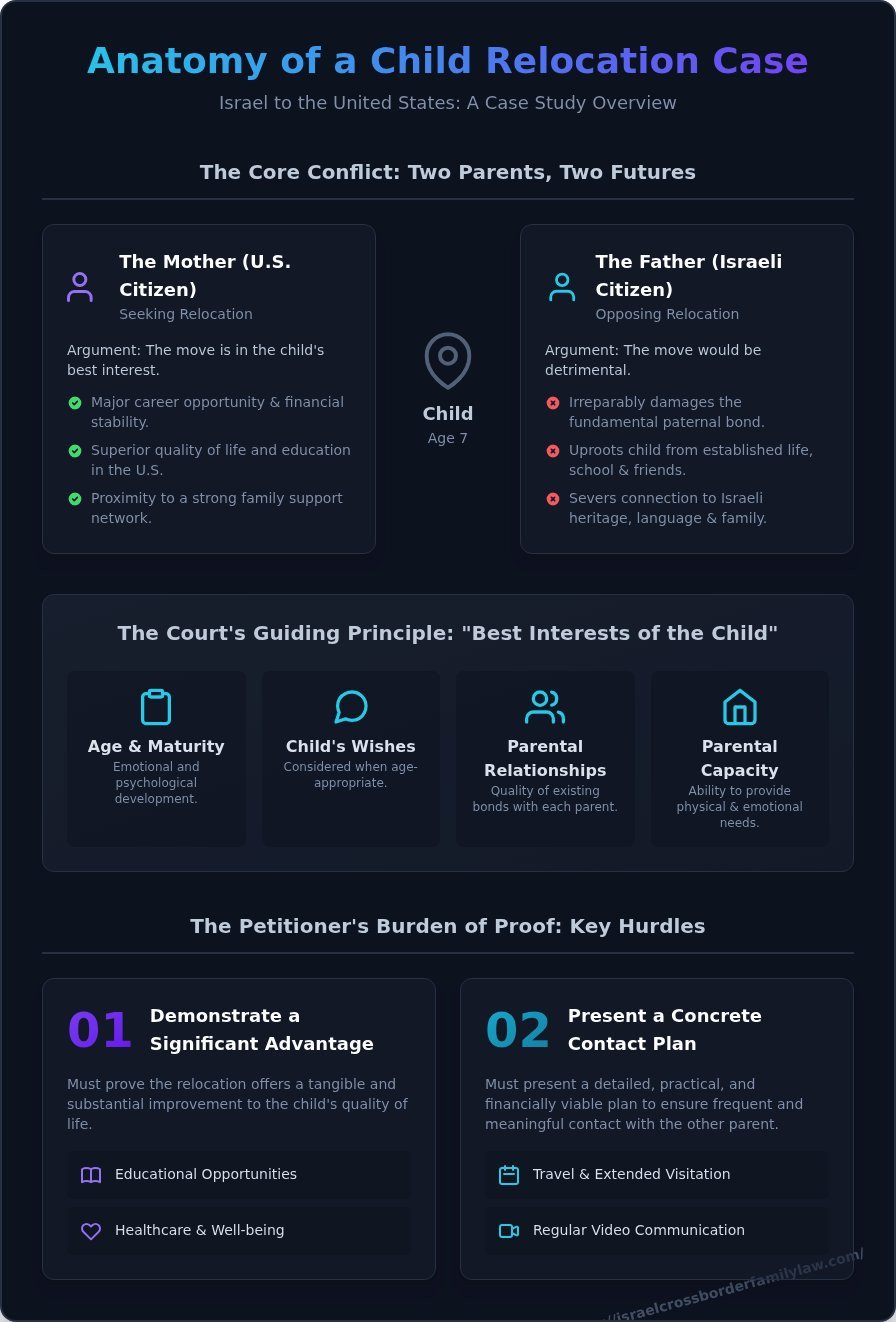
This offer presented a profound dilemma. Sarah sought to relocate with their 7-year-old child, arguing that the move would not only secure her financial future but also provide the child with a superior quality of life and proximity to a robust family support network, including maternal grandparents. However, David was firmly opposed. He contended that uprooting the child from their established life in Israel-including their school, friendships, and cultural environment-would be detrimental to their well-being and would irreparably damage the fundamental paternal bond.
The Initial Legal Stance of Each Parent
The opposing positions were clear from the outset. Sarah’s legal argument centered on the “best interests of the child,” positing that the enhanced economic stability and familial support in the U.S. constituted a material improvement in circumstances. Conversely, David’s position was grounded in the child’s right to maintain a meaningful and consistent relationship with both parents. He argued that the relocation would effectively sever the child’s deep-rooted connection to his Israeli heritage, language, and paternal family, causing significant emotional and social harm.
Why Mediation Failed: The Path to Litigation
Initial attempts to navigate this cross-border dispute through mediation proved unsuccessful. The deeply personal nature of the conflict, combined with the parents’ fundamentally divergent views on the child’s future, created an impasse that amicable negotiation could not resolve. Consequently, court intervention became necessary. Sarah’s legal team proceeded to file an official relocation petition with the Israeli Family Court, formally initiating a complex legal battle. Such international custody disputes are governed by a sophisticated legal framework, often involving principles outlined in treaties like the Hague Convention on the Civil Aspects of International Child Abduction, which sets precedents for handling multi-jurisdictional custody matters.
The Legal Framework: Navigating Israeli Law and The Hague Convention
Successfully representing a client in an international child relocation matter requires a sophisticated understanding of the multi-jurisdictional legal landscape. It is crucial to distinguish these complex cases from those of child abduction. A relocation case is a court-sanctioned process initiated by one parent seeking permission to move abroad with a child, whereas an abduction involves the wrongful removal or retention of a child across international borders. While this case did not involve abduction, the principles underpinning international agreements remain relevant. The Israeli judicial system is deeply informed by international standards, particularly those established by The Hague Convention on the Civil Aspects of International Child Abduction. A comprehensive review of Israel’s implementation of the Hague Convention reveals the nation’s robust commitment to structured, child-focused resolutions in cross-border custody disputes.
The ‘Best Interests of the Child’: More Than a Phrase
In any Israeli family law proceeding involving minors, the guiding principle is unequivocally the “best interests of the child” (tovat hayeled). This standard is paramount, superseding the individual desires or rights of the parents. The court undertakes a multi-faceted analysis, meticulously weighing factors such as the child’s age, emotional and psychological maturity, and-where appropriate-their own expressed wishes. The quality of the child’s existing relationship with each parent is intensely scrutinized, as is the capacity of each parent to provide for the child’s ongoing physical, educational, and emotional needs in their respective locations.
Key Legal Hurdles in an Israeli Relocation Case
Navigating the legal requirements in a child relocation case study israel presents significant challenges, with the burden of proof resting squarely on the parent wishing to move. The court demands more than a mere assertion that the move would be beneficial; the petitioning parent must provide compelling evidence to overcome several key hurdles:
- Demonstrating a Significant Advantage: The parent must prove that the proposed relocation offers a tangible and substantial improvement to the child’s quality of life, considering factors like educational opportunities, healthcare, and familial support systems in the new country.
- Presenting a Concrete Contact Plan: A vague promise to maintain the other parent’s relationship is insufficient. A detailed, practical, and financially viable plan must be presented to ensure frequent and meaningful contact, including provisions for travel, video communication, and extended visitation.
To provide an objective assessment of these factors, Israeli courts frequently appoint independent experts, such as psychologists or social workers. These professionals conduct comprehensive evaluations of the family dynamic and submit an official report with recommendations, which carries significant weight in the court’s final determination.
Building the Case: A Strategy for a Successful Relocation Petition
Success in complex international child relocation matters is not a matter of chance; it is the direct result of a meticulously executed legal strategy. For Sarah, our approach was anchored in proactive, comprehensive evidence-gathering designed to present an undeniable case for the child’s best interests. We anticipated the court’s primary concerns and the opposing party’s potential objections, constructing a robust legal framework to support the petition from its inception.
Crafting the ‘Relocation Plan’: The Cornerstone of the Case
At the heart of our submission was a detailed and compelling ‘Relocation Plan’. This document moved beyond abstract promises, providing the court with concrete evidence of a stable and nurturing future. It included specific details on the proposed housing, formal enrollment information for a highly-rated school, and a clear outline of the robust family support system awaiting the child with her maternal grandparents. Critically, we included a comprehensive visitation schedule for the father, David, and offered to cover all associated travel costs, budgeting a significant sum in Israeli Shekels to ensure continued and frequent contact.
The Role of Expert Evaluations and Reports
Understanding the weight the Israeli Family Court places on professional assessments, we strategically requested the appointment of a child psychologist. Our legal team guided Sarah through a process of full transparency and cooperation with the expert. The psychologist conducted extensive interviews with Sarah, David, and the child, ultimately producing a report that assessed the potential impact of the move. The final report was highly favorable, noting Sarah’s strong parenting capacity and concluding that the relocation, facilitated by the detailed plan, was in the child’s best interests. This expert validation became a pivotal element in this child relocation case study israel.
Presenting Evidence of a Stable Future Abroad
To substantiate the benefits of the move, we compiled a portfolio of compelling evidence demonstrating the superior opportunities available in the United States. This evidence included:
- Sarah’s formal, high-value job offer, proving financial stability and professional advancement.
- Sworn affidavits from the U.S.-based grandparents, detailing their commitment to providing daily care and emotional support.
- Extensive research on the target city, showcasing excellent schools, community activities, and healthcare facilities tailored to the child’s needs.
In parallel, we filed tactical motions to secure temporary travel for holidays. This established a successful precedent of international travel and return, demonstrating to the court our client’s commitment to honouring all co-parenting and access arrangements.
The Court’s Analysis and Final Judgment
The final hearings represented the culmination of months of meticulous preparation and strategic legal arguments. The court was tasked with a complex, multi-jurisdictional decision: balancing the child’s best interests against the father’s fundamental right to maintain a close and meaningful relationship. Our presentation focused on demonstrating that the proposed relocation was not a loss for the father but a net gain for the child’s future, supported by an overwhelming body of evidence. This child relocation case study israel highlights how a well-prepared case can successfully navigate the stringent requirements of Israeli family law.
Weighing the Factors: Why the Court Ruled in Favor of Relocation
In its final verdict, the court provided a detailed analysis of the determining factors, ultimately ruling in favor of Sarah’s petition. The judge’s reasoning underscored the critical importance of a comprehensive and credible relocation strategy. The most influential pieces of evidence included:
- The Relocation Plan: The court specifically cited the exhaustive detail of our plan, which included secured housing, confirmed school enrollment, and a documented support network, deeming it both realistic and carefully considered.
- The Psychological Evaluation: A court-appointed expert’s positive evaluation carried significant weight, confirming the child’s strong bond with the mother and her psychological resilience to adapt to the move.
- The Mother’s Motivations: The judge found Sarah’s motivations to be genuine, stemming from a unique professional opportunity and a desire to improve her child’s quality of life, rather than any malicious intent to obstruct the father’s relationship.
- Substantial Child Benefits: The court agreed that the economic stability, advanced educational opportunities, and proximity to extended family in the U.S. constituted a substantial benefit for the child’s long-term welfare.
The Conditions of Relocation: Ensuring Continued Connection
While the court approved the relocation, the judgment was not unconditional. To safeguard the father-child relationship, the court imposed a strict set of legally binding conditions designed to ensure frequent and consistent contact. These mandates included a generous visitation schedule, requiring the child to spend all major school holidays and a significant portion of summer vacation in Israel at the mother’s expense. Furthermore, the court ordered a minimum of three video calls per week and required Sarah to post a financial bond of ₪100,000 to guarantee her full compliance with the visitation and contact schedule. These measures demonstrate the court’s commitment to preserving parental bonds in complex cross-border cases.
The success of this case underscores the necessity of proactive, strategic legal counsel in international family law matters. Facing a similar challenge? Schedule a consultation today.
Key Takeaways for Parents Facing a Relocation Case in Israel
The successful outcome detailed in this child relocation case study israel was not an accident; it was the direct result of meticulous strategic planning and sophisticated legal execution. For any parent contemplating or currently involved in such a complex, cross-border matter, it is imperative to understand that Israeli Family Courts prioritize demonstrable facts and well-conceived plans over emotional appeals. The guiding principle is always the ‘Best Interests of the Child’ (טובת הילד), a standard that demands concrete evidence of a stable and beneficial future.
Success hinges on presenting a comprehensive, actionable relocation plan that addresses every facet of the child’s life abroad-from education and healthcare to social integration and community support. Equally critical is a robust proposal for maintaining and fostering the child’s relationship with the non-relocating parent. The court must be convinced that the move will enhance the child’s life without irrevocably damaging this fundamental parental bond. Unilateral actions, such as moving the child without a court order, are strictly forbidden and will severely prejudice your case.
Do’s and Don’ts for the Relocating Parent
Navigating your petition requires careful and deliberate action. Based on the lessons from this child relocation case study israel and our extensive experience, we advise adhering to the following principles:
- DO: Be meticulously organized and transparent in your petition. Your case must be child-focused, clearly articulating how the relocation serves the child’s best interests above all else.
- DO: Gather extensive, tangible documentation about the proposed life abroad. This includes school acceptance letters, detailed information on extracurricular activities, employment contracts, housing agreements, and evidence of a support network.
- DON’T: Speak negatively about the other parent to court-appointed experts, social workers, or in court filings. Maintain a respectful and cooperative posture; any perceived hostility can undermine your petition.
- DON’T: Make any definitive travel or living arrangements before securing a final, unappealable court order. Booking flights or signing a lease prematurely can be viewed as contempt of the court’s process.
How Expert Legal Counsel Makes the Difference
International child relocation is one of the most challenging areas of family law. The involvement of seasoned legal counsel is not merely beneficial; it is essential. An expert legal team provides the strategic framework necessary for success by navigating the complex nuances of the Israeli Family Court system and international conventions.
Our role extends beyond courtroom representation. We connect clients with a network of qualified psychological and educational experts whose assessments can be pivotal. We specialize in framing the legal argument to align precisely with the ‘Best Interests of the Child’ standard, anticipating and systematically countering the opposing party’s arguments. A successful outcome is achievable, but it requires the sophisticated guidance and strategic foresight that only experienced counsel can provide. If you are facing a similar situation, we invite you to contact our firm for a confidential consultation.
Navigating Your Path Forward in Complex Relocation Cases
As this successful child relocation case study israel demonstrates, a favorable outcome is not a matter of chance but the result of a meticulously prepared petition. The key takeaways are clear: success hinges on a profound understanding of the Israeli Family Court’s singular focus on the child’s best interests and a comprehensive legal strategy that adeptly navigates the complexities of both Israeli law and The Hague Convention.
Successfully managing such high-stakes, multi-jurisdictional matters requires legal counsel with a proven track record in these specific, nuanced disputes. Our firm brings decades of focused experience in US-Israel cross-border litigation, offering clients a deep and practical understanding of the Israeli Family Court system. We have consistently achieved positive results for our clients in the most complex child custody and relocation cases.
If you are facing a similar challenge, we invite you to discuss your international family law case with our experienced attorneys. While the path forward may seem daunting, remember that with dedicated and strategic legal guidance, a positive future for you and your child is achievable.
Frequently Asked Questions
What is the difference between child relocation and child abduction in Israel?
Child relocation involves a formal legal process where a parent obtains court permission to move abroad with a child. Conversely, child abduction is the wrongful, unilateral removal of a child across an international border in breach of the other parent’s custody rights, a severe violation under Israeli law and the Hague Convention. The distinction is critical, as relocation is a court-sanctioned procedure focused on the child’s welfare, while abduction is an illegal act with profound legal consequences.
How long does a child relocation case typically take in the Israeli court system?
The duration of a child relocation case within the Israeli court system is highly variable, contingent upon the complexity of the matter and the degree of inter-parental conflict. A straightforward case with some level of agreement may conclude within several months. However, highly contentious proceedings, which often require extensive expert psychological evaluations and multiple hearings, can extend for a year or significantly longer, particularly if the court’s decision is subjected to an appeal process.
What happens if the other parent does not agree to the relocation?
Should the other parent not consent to the relocation, the parent wishing to move must file a formal relocation claim with the Israeli Family Court. The matter then becomes a litigated dispute where the court undertakes a comprehensive analysis guided by the paramount principle of the child’s best interests. This involves appointing experts to assess the potential impact on the child, evaluating each parent’s motivations, and scrutinizing the proposed arrangements in the destination country before rendering a judgment.
At what age can a child’s own preference influence the court’s decision in Israel?
In Israel, there is no definitive statutory age at which a child’s preference becomes the deciding factor in a relocation case. Instead, the court assesses the child’s maturity and level of understanding. While the views of a mature child, typically over the age of 10, are considered an important factor and given significant weight, this preference is not determinative. The judge must balance the child’s wishes against all other evidence pertaining to their overall welfare and long-term best interests.
How can I ensure the other parent complies with visitation orders after relocation?
Ensuring compliance requires a meticulously drafted court order that is enforceable in the destination jurisdiction. For relocations to the U.S., a Hague Convention signatory, the Israeli order can be registered and enforced by American courts. As demonstrated in any successful child relocation case study israel to the U.S., the order must detail specific schedules, travel cost allocations, and communication protocols to provide a clear, legally binding framework that minimizes ambiguity and facilitates cross-border enforcement.
Is it possible to relocate from Israel to a country that is not a Hague Convention signatory?
While relocating from Israel to a country that is not a Hague Convention signatory is legally possible, it presents substantial complexities. The Israeli court will apply an exceptionally high level of scrutiny to such a request, given the inherent difficulties in enforcing visitation and custody rights in a non-signatory jurisdiction. The petitioning parent bears a heavy burden to prove that robust, reliable, and legally enforceable mechanisms exist within the destination country to safeguard the other parent’s relationship with the child.

Article by
Gabriel Lior
A Personal Journey That Became a Mission
The advisory was founded by an American father Gabriel Lior, LLB, MBA , global entrepreneur, and cross-border advisor who spent more than a decade navigating the Israeli family court system firsthand and now lives in Singapore with his son.
As a divorced parent in a cross-border family, Gabriel faced nearly every legal challenge a foreign parent can encounter in Israel — including child custody disputes, child support proceedings, property matters in Israel and abroad, false accusations, and complex immigration and relocation proceedings.
Over the years, he learned the hard way how difficult it is for non-Israeli parents to understand the system, identify the right legal strategy, and choose the right legal representation — especially when language, culture, and jurisdictional differences are involved. He also witnessed how foreign parents and new immigrants are often disadvantaged or taken advantage of by service providers and institutions simply because they lack local knowledge or fluency.
From Client to Advisor
To truly understand — and survive — the system, Gabriel pursued formal legal education in Israel, completing two Israeli law degrees, alongside a BA and MBA earned in the United States. This was never about becoming a practicing attorney, but about gaining a deep, structural understanding of how the system works — and where it breaks down for foreign parents.
This rare combination of:
Firsthand client experience
Israeli legal and US business education
International business and negotiation training
Decades of commercial execution
created a unique perspective – one that understands both sides of the table.
After years of litigation, persistence, and at times self-representation, he ultimately succeeded in securing custody of his son and relocating abroad through a rare legal victory in the Israeli Supreme Court — becoming one of the first fathers in Israel to do so under these circumstances.
Disclaimer
Important Disclaimer:
The information provided on this website and in its content is for general informational and educational purposes only and does not constitute legal advice, legal opinion, or legal representation.
Gabriel Lior is not licensed to practice law in Israel (nor is he interested in doing so) and does not provide legal services, despite having completed 2 Law Degrees. The services offered are advisory in nature and are intended to provide general guidance, strategic insight, and information regarding cross-border family law considerations.
No attorney-client relationship is formed by accessing this website, reading its content, or communicating with us.
Any decisions made based on this information are at your own discretion and risk. For legal advice specific to your situation, you should consult a licensed attorney in the relevant jurisdiction.
Where appropriate, we may refer clients to independent, licensed attorneys or professionals. Such referrals do not constitute legal representation and no liability is assumed for services provided by third parties.