What if a simple search for a bargain leads you directly into a complex legal misunderstanding? If you’ve recently asked yourself what is hotzaa.com, you’re likely caught between two very different worlds. You might be looking for an online fashion retailer that, as of August 2026, carries a dangerously low trust score and multiple security blacklists. On the other hand, you may have encountered the word “Hotzaa” in a daunting Hebrew document from a bank or an Israeli court, leading to immediate concern about your financial or parental standing.
It’s completely normal to feel a sense of anxiety when unfamiliar Hebrew terms appear alongside financial or family matters. We understand that for expats and international families, the gap between a “scam alert” and a “legal notice” can feel incredibly narrow. This article helps you verify the safety of the shopping site while clarifying why “Hotzaa” is a critical concept in Israeli debt collection and cross-border family law. You’ll learn how to distinguish between a suspicious TikTok ad and a serious legal notification regarding “Hotzaat Katin” or the bailiff’s office, ensuring you have the clarity needed to protect your interests before making any commitments.
Key Takeaways
- Verify the legitimacy of the shopping site and understand why security experts have flagged what is hotzaa.com as a high-risk entity.
- Decipher the linguistic confusion surrounding the Hebrew term “Hotzaa” and its different meanings in financial and legal contexts.
- Learn about the critical risks associated with “Hotzaat Katin” and the legal frameworks governing international child removal.
- Discover why relying on automated translations for Israeli court documents can lead to significant strategic errors for international families.
- Recognize the importance of seeking professional advisory to navigate the complexities of the Israeli legal system and cross-border disputes.
What is Hotzaa.com? An Analysis of the Online Retailer
For many English speakers in Israel, the question of what is hotzaa.com arises when they see advertisements for trendy apparel or encounter the term in their daily lives. On the surface, the website presents itself as a standard e-commerce platform specializing in women’s fashion; it offers items like sweaters, vests, and dresses. However, the site’s sudden appearance and aggressive marketing tactics have raised concerns. As of August 2026, security analysts have flagged the domain for its lack of transparency and hidden ownership details, noting that it carries a high risk for consumers.
The platform primarily targets international shoppers through high-frequency “trending” content on social media. By leveraging visual ads on platforms like TikTok, the site encourages impulse purchases from consumers in the United States and the European Union. While the aesthetic may appear professional, the lack of a clear brand history, verifiable business address, or designer attribution suggests a business model often associated with high-risk drop-shipping operations.
To better understand the risks associated with modern online shopping, watch this helpful video:
Product Categories and Target Market
Why the Name ‘Hotzaa’ Causes Confusion
The phonetic overlap between the brand name and the Hebrew word for “expense” or “removal” is a common source of frustration for the Anglo community. If you’re searching for information on an unexpected bank charge or a serious legal matter, such as the Hague Convention on the Civil Aspects of International Child Abduction, you might inadvertently land on this retail site. This is why verifying domain intent is essential before you provide any personal or payment information. You shouldn’t assume a site is safe or relevant to your legal needs just because the name sounds familiar.
Understanding the distinction between a commercial retail brand and a foundational legal term is the first step for any expat navigating the Israeli system. While the website might just be a high-risk clothing store, the legal implications of the word “Hotzaa” are far more profound. This article is published on an independent advisory platform, not a law firm, and is intended to provide strategy and risk assessment guidance rather than formal legal advice. Legal services are only provided by licensed attorneys under a separate engagement.
Is Hotzaa.com Legit? Safety Warnings and Red Flags
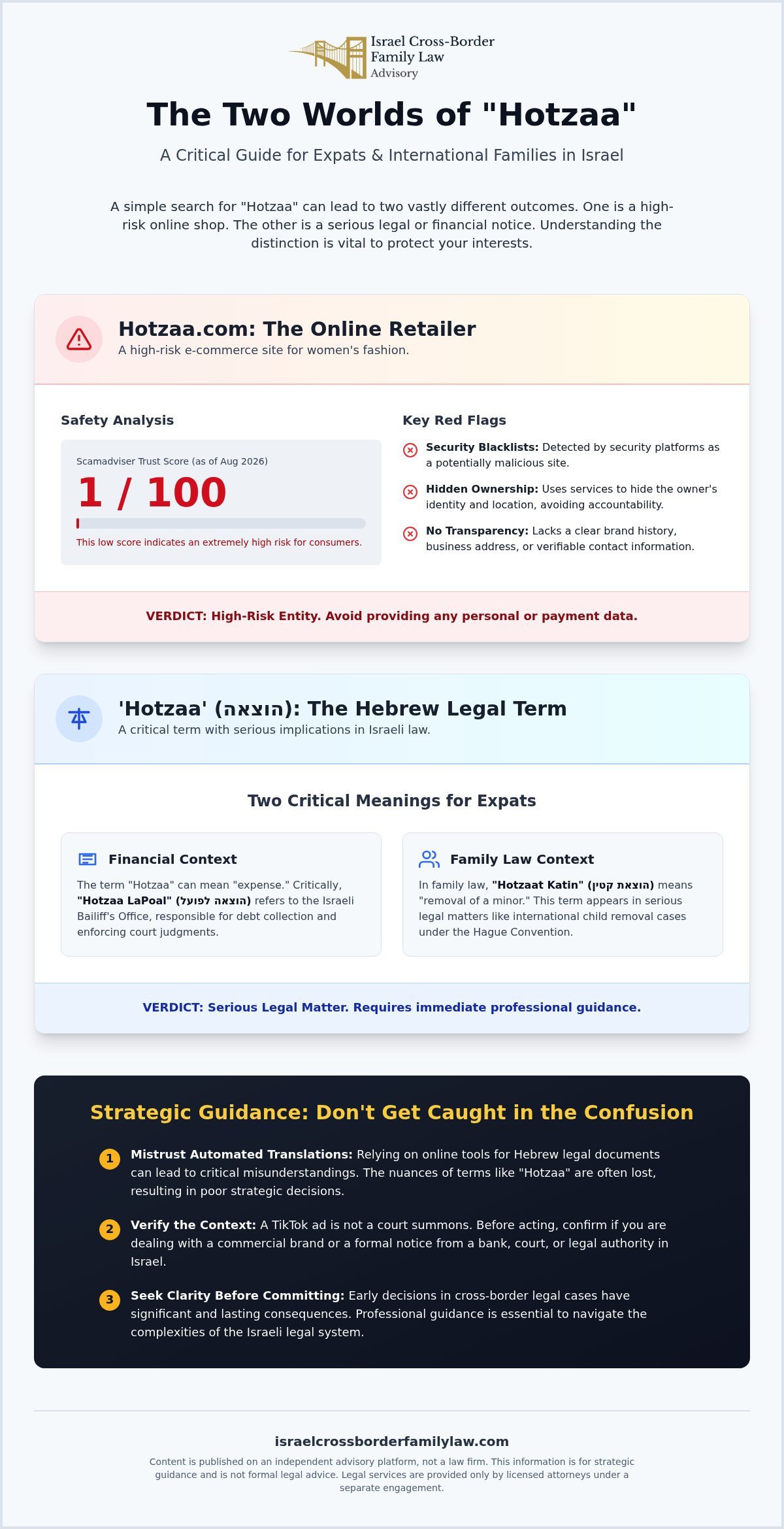
Determining the legitimacy of a digital entity requires a thorough analysis of its technical footprint and user feedback. When evaluating what is hotzaa.com, the available data reveals several indicators typical of high-risk operations. As of August 2026, major security platforms like Scamadviser have assigned the site a trust score of 1 out of 100. This rating isn’t arbitrary. It’s based on multiple factors including hidden ownership details and detections by security blacklists as recently as March 2026. For an expat navigating the complexities of a new country, these digital red flags are just as critical as understanding a formal legal notice.
The site administrators use specialized technical services to mask their identity and physical location. This lack of transparency is a hallmark of entities that wish to avoid accountability in cross-border disputes. When ownership is obscured, pursuing a refund or legal remedy becomes a multi-jurisdictional challenge that most consumers are not equipped to handle. User reports from April 16, 2026, indicate that while the site appears to be a standard retailer, shipments often originate from overseas locations like China. This leads to significant delays and products that don’t match the high-quality images used in advertisements.
Common Consumer Complaints
The most frequent grievances reported by users involve a phenomenon often described as “ghosting.” After a purchase is completed, customers often find that the site’s communication channels go silent. Common issues reported to consumer protection trackers include:
- Non-delivery of items: Orders placed through social media advertisements frequently fail to arrive at the customer’s address.
- Product Mismatch: Receiving low-quality items that bear little resemblance to the “Stylist Edits” promoted online.
- Missing Contact Information: A total absence of a working phone number or physical business address makes resolution nearly impossible.
How to Protect Yourself Online
Protecting your financial interests in a transnational environment requires a proactive strategy. When investigating what is hotzaa.com, you’ll see that the domain was registered on January 6, 2026, and is set to expire only one year later. This short-term registration is common among sites that don’t intend to build a long-term brand presence. It’s also wise to use credit cards with strong dispute resolution policies rather than direct bank transfers. Bank transfers offer very little protection once the funds have left your account.
If you find yourself confused by digital alerts or Hebrew terms that seem to imply financial risk, it’s helpful to seek professional clarification before you commit your resources. Gaining a clear understanding of the environment is the best way to mitigate risk and avoid falling for sophisticated online schemes. Remember that this content is published on an independent advisory platform and does not constitute formal legal representation.
The Hebrew Meaning of ‘Hotzaa’: A Guide for Expats
While a search for what is hotzaa.com might be driven by interest in an online retailer, an expat living in Israel often encounters the word in a much more serious setting. In Hebrew, the term ‘Hotzaa’ (הוצאה) literally translates to an expense, an outlay, or a removal. It’s a foundational word that appears on everything from monthly bank statements to high-stakes court documents. For those unfamiliar with the Israeli legal system, seeing this word in a formal letter or a digital alert can trigger significant anxiety. Understanding whether the term refers to a standard financial charge or a mandatory legal instruction is the first step toward regaining control. The difference between a simple “expense” and a “legal removal” is vast, and misidentifying the context can lead to costly delays.
Hotzaot: Managing Expenses in Israel
In daily life, you’ll most often see the plural form, ‘Hotzaot’. This is frequently used in ‘Hotzaot Ha-bayit’, which refers to your standard household expenses like utilities and rent. In the context of family law, however, the term takes on a more technical and critical meaning. During divorce proceedings or estate planning, the court carefully examines ‘Hotzaot’ to calculate alimony, known in Israel as Mezonot. These calculations determine the future lifestyle standards for children and spouses. Because of the weight of early decisions in the Israeli system, having absolute clarity on your financial outlays is vital before you sign any financial agreement. The inherent complexity of cross-border finances means that what looks like a simple expense category in your home country may be treated very differently under Israeli law.
Legal Context: Removal and Execution
The most daunting application of the term is found in ‘Hotzaa Lapoal’. This refers to the Israeli Enforcement and Collection Authority, the government agency responsible for collecting debts and enforcing court judgments. If you receive a notice from this office, it indicates that a legal execution process has been initiated. It’s a system that can feel overwhelming for those who don’t speak the language fluently or understand the cultural nuances of Israeli bureaucracy. Learn more about for expats and foreign nationals to see how these local systems interact with your specific international status. While the search for what is hotzaa.com might lead to a suspicious clothing store, encountering ‘Hotzaa Lapoal’ requires a strategic response to manage the legal risks involved. Recognizing these differences early allows you to seek the right guidance before commitments are made or deadlines pass.
This article is published on an independent advisory platform and is intended to provide strategy and risk assessment guidance rather than formal legal advice. It’s important to remember that legal services are only provided by licensed attorneys under a separate engagement. Gaining clarity before you commit to a course of action is the most effective way to navigate the significant differences between legal systems and cultures.
‘Hotzaat Katin’: International Child Removal and the Hague Convention
While you might have arrived at this page by asking what is hotzaa.com to investigate a suspicious shopping site, the word “Hotzaa” carries its most profound weight in the context of parental rights and international law. In the Israeli legal system, “Hotzaat Katin” refers to the removal of a minor from the country. This is not merely a linguistic nuance; it is the most serious legal application of the term. For international families, a misunderstanding of this concept can lead to allegations of international child abduction, triggering complex multi-jurisdictional litigation that spans continents.
The weight of early decisions in these matters cannot be overstated. A parent might believe they are taking a temporary trip to visit family abroad, but without explicit, written consent or a court order, this “removal” can be legally classified as a wrongful act. Distinguishing between a retail brand and a legal mandate is vital. The consequences of ignoring a notice related to “Hotzaa” in a family context are life-altering, far exceeding the consumer risks identified when researching what is hotzaa.com. Strategy must always take precedence over emotion when a child’s residence is at stake.
The Hague Convention and Israel
Israel is a long-standing signatory to the Hague Convention on the Civil Aspects of International Child Abduction, a multilateral treaty that includes more than 100 countries as of July 2026. This convention is designed to ensure the prompt return of children who have been wrongfully removed from their country of “habitual residence.” In these disputes, the court does not initially decide on long-term custody. Instead, it focuses on whether the child was removed in violation of the other parent’s rights. Understanding the “habitual residence” concept is critical, as it refers to the child’s established center of life rather than their nationality or the parents’ preferences.
Preventative Measures for Parents
For parents concerned about the unauthorized removal of a child from Israel, the legal system provides specific protective tools. The most common is the “Stay of Exit” order, known in Hebrew as Tzav Ikur Yetzia min Ha’aretz. This order prevents a minor from leaving the country through any port of exit until the court specifically lifts the restriction. Beyond emergency orders, families should focus on drafting clear, enforceable travel clauses within their divorce or custody agreements. These clauses should specify the duration of travel, the required notice periods, and the exact conditions for returning to Israel. Gaining international custody and relocation guidance early in the process is the most effective way to mitigate these high-stakes risks.
If you are facing a dispute involving the potential removal of a child, it is essential to request a confidential consultation to assess your specific risks. This content is published on an independent advisory platform and is intended for informational purposes. It does not constitute formal legal advice or an attorney-client relationship. Legal services are only provided by licensed attorneys under a separate, formal engagement.
Navigating Cross-Border Legal Terms with Professional Guidance
Relying on automated translations or basic search results for complex Israeli legal terms is a significant risk for international families. When you search for what is hotzaa.com, an algorithm might correctly identify a retail site, but it cannot explain the multi-jurisdictional weight of a “Hotzaa” notice appearing in a bank document or court summons. In the Israeli system, the nuance of a single word can change your legal standing overnight. Professional guidance ensures that you don’t just translate the language, but you understand the strategic implications behind every term. Gaining this clarity is the most effective way to protect your interests in a foreign legal environment.
The danger of misinterpretation is particularly high for Anglos and expats who are accustomed to different legal cultures. While you might have started your investigation by asking what is hotzaa.com to avoid a shopping scam, the same word in a family law context could signal a high-stakes crisis involving debt collection or child removal. Strategy and risk assessment are far more valuable than simple document filing. You need to understand how the Israeli system views your specific situation before you take any action that could have long-term consequences.
Strategy vs. Representation
There’s a distinct difference between hiring a lawyer for courtroom representation and engaging a strategic advisory service. Representation focuses on the immediate filing of documents and formal appearances in court. In contrast, an independent advisory provides a comprehensive bridge between US and Israeli legal cultures, focusing on risk assessment and long-term positioning. You can learn more about how the advisory works to see how this approach offers a steady guide through complex transnational matters. By prioritizing strategy early, you can avoid the common pitfalls that arise when local practitioners don’t fully account for your international status.
Next Steps for Clarity
To move forward with confidence, you must first identify the specific context of the term “Hotzaa” you have encountered. Is it a retail concern, a financial line item, or a formal legal instruction? For visual explanations of these concepts and how they affect international families, you can consult the Israel Family Law YouTube channel. If you find yourself facing a cross-border family or financial crisis, requesting a confidential review is a prudent way to assess your options without the pressure of immediate litigation.
This article is published on an independent advisory platform and is intended to provide strategy and risk assessment guidance. It’s important to remember that this content does not constitute formal legal representation or legal advice. Legal services are only provided by licensed attorneys under a separate engagement. The inherent complexity of cross-border issues requires a deliberate, informed approach. Get clarity before you commit. Request a confidential consultation.
Protecting Your Interests in a Cross-Border Environment
Navigating the intersection of digital commerce and international law requires a discerning eye and a proactive strategy. Whether you were initially investigating what is hotzaa.com to avoid a retail scam or encountered the term in a daunting legal document, the priority remains the same: gaining absolute clarity. We’ve explored how the high-risk nature of certain e-commerce platforms mirrors the complexity of the Israeli legal system, where a single transliterated word can mean anything from a household expense to the international removal of a minor.
Relying on automated translations or surface-level searches is often insufficient when your financial standing or parental rights are at stake. Our advisory platform provides a calm, educational path for international families, bridging the gap between US and Israeli legal cultures with authoritative expertise. By focusing on strategy and risk assessment early, you can avoid the common pitfalls of cross-border litigation and move forward with confidence. Get clarity before you commit. Request a confidential consultation.
This content is published on an independent advisory platform and does not constitute formal legal representation. Our licensed practitioners bring extensive cross-border experience to help you navigate these multi-jurisdictional challenges with the steady, knowledgeable guidance you deserve.
Frequently Asked Questions
Is Hotzaa.com a scam site?
Hotzaa.com is widely considered a high-risk site by security analysts who have assigned it a trust score of 1 out of 100 as of August 2026. Multiple security vendors blacklisted the domain in March 2026 due to hidden ownership details and suspicious activity patterns. If you are asking what is hotzaa.com, you should treat it as a potential scam. The platform lacks the transparency and brand history required to inspire consumer confidence.
What does the word ‘Hotzaa’ mean in an Israeli court order?
In an Israeli court order, ‘Hotzaa’ typically refers to either a financial expense or the removal of a person or object. For example, it might appear in a ruling regarding legal fees or in a more serious context involving the removal of a child from the country. Because the term carries different weights depending on the specific case, understanding the context is essential to avoid misinterpreting your legal obligations.
Can I get my money back if I bought something from Hotzaa.com?
Obtaining a refund directly from the site is difficult because of its obscured ownership and reported history of “ghosting” customers after a purchase. Your most effective option is to contact your credit card provider to initiate a formal dispute or chargeback. Credit cards generally offer more robust protection than direct bank transfers. You should document all advertisements and communication to support your claim during the bank’s review process.
What is ‘Hotzaat Katin’ and why is it serious?
‘Hotzaat Katin’ refers to the removal of a minor from Israel, a situation that often triggers international child abduction protocols. This is a critical legal matter because it falls under the Hague Convention, a multilateral treaty signed by over 100 countries as of July 2026. Even a trip intended to be temporary can be legally classified as wrongful removal without proper consent, leading to complex and high-stakes multi-jurisdictional litigation.
What should I do if I receive a notice from ‘Hotzaa Lapoal’?
You should take immediate action to understand the nature of the debt or judgment referenced in the notice. ‘Hotzaa Lapoal’ is the Israeli Enforcement and Collection Authority responsible for executing court judgments. Ignoring these documents can lead to severe consequences, such as bank account freezes or ‘Stay of Exit’ orders. It’s important to seek clarity on the specific procedures required to respond effectively within the Israeli system before deadlines pass.
Are there any legitimate versions of the Hotzaa website?
There are no known legitimate retail versions of this specific website associated with a transparent, established brand. While ‘Hotzaa’ is a common Hebrew word that may appear in various business names, the specific domain flagged by security experts is not considered safe. You should always verify a site’s physical address and brand history before committing your financial resources. Gaining clarity on a site’s intent is the best way to mitigate online risk.
How do I check if an Israeli legal term is being used correctly in my documents?
You should avoid relying on automated translation tools, as they often miss the technical nuances of the Israeli legal system. Misinterpreting a term like ‘Hotzaa’ can lead to strategic errors in family law or financial matters. Seeking a professional advisory review is the most reliable way to ensure you understand the weight of your documents. This approach provides a necessary bridge between your home legal culture and the complexities of Israeli law.
Why do so many clothing sites have Hebrew-sounding names?
Some retailers use transliterated words to create a unique brand identity or to target specific demographics through social media algorithms. In the case of what is hotzaa.com, the use of a Hebrew word for ‘expense’ or ‘removal’ creates significant confusion for expats who encounter the term in legal contexts. It is essential to distinguish between a suspicious commercial brand and a foundational legal term to avoid unnecessary anxiety regarding your standing in Israel.

Article by
Gabriel Lior
A Personal Journey That Became a Mission
The advisory was founded by an American father Gabriel Lior, LLB, MBA , global entrepreneur, and cross-border advisor who spent more than a decade navigating the Israeli family court system firsthand and now lives in Singapore with his son.
As a divorced parent in a cross-border family, Gabriel faced nearly every legal challenge a foreign parent can encounter in Israel — including child custody disputes, child support proceedings, property matters in Israel and abroad, false accusations, and complex immigration and relocation proceedings.
Over the years, he learned the hard way how difficult it is for non-Israeli parents to understand the system, identify the right legal strategy, and choose the right legal representation — especially when language, culture, and jurisdictional differences are involved. He also witnessed how foreign parents and new immigrants are often disadvantaged or taken advantage of by service providers and institutions simply because they lack local knowledge or fluency.
From Client to Advisor
To truly understand — and survive — the system, Gabriel pursued formal legal education in Israel, completing two Israeli law degrees, alongside a BA and MBA earned in the United States. This was never about becoming a practicing attorney, but about gaining a deep, structural understanding of how the system works — and where it breaks down for foreign parents.
This rare combination of:
Firsthand client experience
Israeli legal and US business education
International business and negotiation training
Decades of commercial execution
created a unique perspective – one that understands both sides of the table.
After years of litigation, persistence, and at times self-representation, he ultimately succeeded in securing custody of his son and relocating abroad through a rare legal victory in the Israeli Supreme Court — becoming one of the first fathers in Israel to do so under these circumstances.
Disclaimer
Important Disclaimer:
The information provided on this website and in its content is for general informational and educational purposes only and does not constitute legal advice, legal opinion, or legal representation.
Gabriel Lior is not licensed to practice law in Israel (nor is he interested in doing so) and does not provide legal services, despite having completed 2 Law Degrees. The services offered are advisory in nature and are intended to provide general guidance, strategic insight, and information regarding cross-border family law considerations.
No attorney-client relationship is formed by accessing this website, reading its content, or communicating with us.
Any decisions made based on this information are at your own discretion and risk. For legal advice specific to your situation, you should consult a licensed attorney in the relevant jurisdiction.
Where appropriate, we may refer clients to independent, licensed attorneys or professionals. Such referrals do not constitute legal representation and no liability is assumed for services provided by third parties.