Navigating a family law matter is challenging enough; when it spans the jurisdictions of both the United States and Israel, the complexity multiplies, introducing a level of uncertainty that can be overwhelming. The fear of engaging counsel without a nuanced understanding of both legal systems, coupled with concerns over unpredictable fees and communication difficulties across time zones, is a significant burden. Selecting the right legal advocate is paramount, and the process begins by knowing the best questions to ask a cross border lawyer to properly vet their experience and approach.
This essential checklist is designed to empower you in this critical selection process. We provide 15 strategically crafted questions that move beyond surface-level inquiries, allowing you to probe a candidate’s practical experience with multi-jurisdictional cases like yours. By arming yourself with this knowledge, you can effectively assess potential attorneys, gain clarity on their proposed strategy, understand potential costs in both USD and ILS, and ultimately feel confident in securing a competent, trustworthy representative capable of navigating the intricate landscape of your international case toward a favorable resolution.
First, Why You Absolutely Need a Cross-Border Specialist
When facing a family law matter, such as divorce or child custody, the default is to seek local counsel. This is logical, as family law is intensely and uniquely local, governed by state or national statutes that vary dramatically. However, when your case involves parties, assets, or children in both the United States and Israel, this single-jurisdiction approach becomes not just inadequate, but actively perilous. The legal frameworks of two sovereign nations can directly contradict one another, creating a complex web of legal challenges that a domestic lawyer is unequipped to navigate.
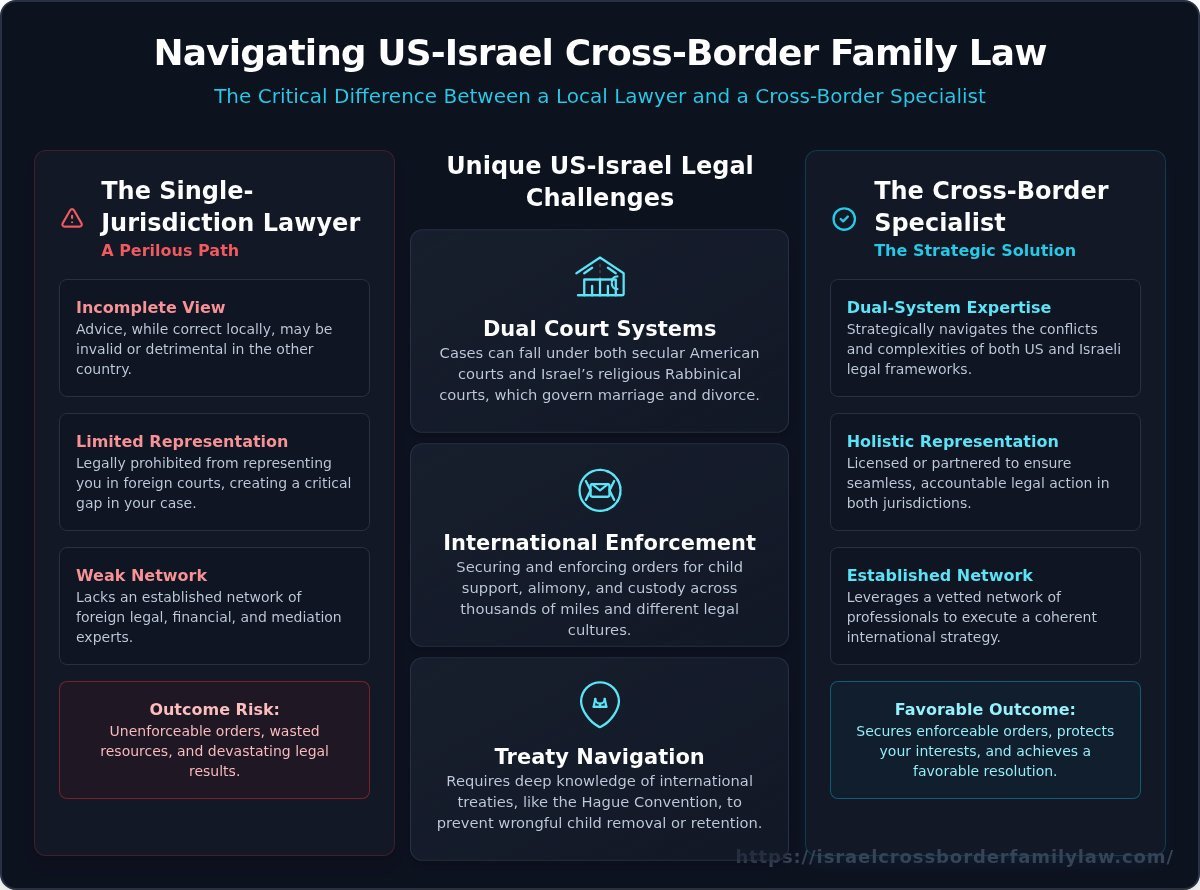
To better understand the complexities involved, consider the following overview:
This intersection of legal systems is a sophisticated field known as private international law, or ‘conflict of laws.’ It determines which jurisdiction’s laws should apply to your dispute, which court has the authority to hear the case, and how a judgment from one country can be recognized and enforced in another. A cross-border lawyer is not merely a litigator; they are a strategic guide who understands how to manage these conflicts to protect your interests. This is why knowing the best questions to ask a cross border lawyer is the critical first step toward a successful resolution.
The Dangers of Relying on a Single-Jurisdiction Lawyer
Engaging an attorney licensed only in one country for a multi-jurisdictional case exposes you to significant risks. Their advice, while correct for their location, may be invalid or even detrimental in the other country. Furthermore, they are legally prohibited from representing you in foreign courts and lack the established network of foreign legal professionals, mediators, and financial experts essential for executing a coherent international strategy. This can lead to unenforceable orders, wasted resources, and devastating legal outcomes.
Unique Challenges in US-Israel Family Law
The US-Israel corridor presents a particularly complex legal landscape. A specialist must be adept at navigating profoundly different systems:
- Dual Court Systems: Effectively managing cases that may fall under the jurisdiction of both secular American courts and Israel’s religious Rabbinical courts, which often govern marriage and divorce.
- International Enforcement: Securing and enforcing critical court orders for child support, alimony (spousal maintenance), or custody arrangements across thousands of miles and different legal cultures.
- Treaty Navigation: Possessing a deep, practical understanding of international treaties, most notably the Hague Convention on the Civil Aspects of International Child Abduction, which governs wrongful removal or retention of children.
Without this specialized expertise, a client is left vulnerable in a system designed for domestic, not global, disputes.
Category 1: Questions About Experience and Dual-Jurisdiction Expertise
Before engaging with any legal professional on a sophisticated international matter, it is critical to vet their foundational qualifications. The goal of this initial inquiry is to move beyond a simple claim of ‘international experience’ and ascertain tangible proof of their work within both the US and Israeli legal systems. These are among the best questions to ask a cross border lawyer because they establish the credibility, specialized knowledge, and operational capacity necessary to navigate complex, multi-jurisdictional disputes. An attorney’s responses here will reveal whether they are a true specialist or a generalist with only occasional exposure to this intricate field.
1. What percentage of your practice is dedicated to US-Israel cross-border family law?
This question immediately distinguishes a dedicated practitioner from a dabbler. Cross-border family law, with its conflicting regulations on divorce, custody, and asset division, demands a profound and current understanding of two distinct legal frameworks. An ideal response will confirm that a significant, primary portion of their practice is devoted to these matters. A red flag is an admission that such cases are only a small or occasional part of their work, which suggests a potential lack of the deep, nuanced expertise your situation requires.
2. Are you licensed to practice in both jurisdictions? If not, how do you manage the foreign legal aspects?
This inquiry probes the firm’s formal authority and logistical structure for handling multi-jurisdictional cases. While dual-licensure is the gold standard, it is not the only effective model. A strong answer will involve either licensure in one country coupled with a dedicated, formal partner firm in the other, ensuring seamless collaboration. Verifying credentials and understanding a firm’s operational structure are core tenets of the due diligence process for Hiring a Lawyer. Be wary of vague references to ‘consultants’ or informal networks, as this can signal a lack of established protocol and accountability when representing your interests abroad.
3. Can you describe a case similar to mine that involved both US and Israeli courts?
A lawyer’s ability to answer this question effectively separates theoretical knowledge from proven, practical application. A competent cross-border attorney should be able to articulate a specific, anonymized case history that demonstrates their strategic thinking and successful navigation of both judicial systems. The answer should detail the challenges faced and the strategies employed to achieve a favorable outcome. Generic responses, or an inability to cite a relevant precedent from their own experience, indicate a critical lack of the hands-on expertise necessary to protect your interests effectively.
Category 2: Questions About Case Strategy and Legal Approach
Once you have established a lawyer’s credentials and experience, the focus must shift from their past accomplishments to your future. The following inquiries are designed to probe their strategic thinking, procedural philosophy, and how they would specifically approach the complexities of your multi-jurisdictional matter. These are some of the best questions to ask a cross border lawyer to ensure their working style and legal approach align with your objectives and expectations.
4. What is the likely legal strategy for my case, and what are the potential outcomes?
This question moves beyond hypotheticals and tests the advocate’s ability to conduct an initial analysis of your specific situation. A proficient lawyer will provide a candid assessment of your case’s strengths and weaknesses, outlining a clear, logical path forward. They should be able to articulate several potential scenarios-from a negotiated settlement to a court judgment-while managing your expectations realistically. Be wary of practitioners who offer overly optimistic guarantees or cannot outline a coherent strategy, as this may signal inexperience.
5. Which country’s laws will likely govern my divorce/custody/inheritance matter, and why?
This is a foundational question in any international legal dispute. The answer reveals the lawyer’s technical depth in the sophisticated field of private international law, or “conflict of laws.” A strong answer will go far beyond “it depends,” delving into the specific jurisdictional rules that apply. The lawyer should explain concepts like habitual residence, domicile, and the strategic considerations of “forum shopping” (selecting the most favorable jurisdiction to file a case), demonstrating a command of the critical factors that will dictate your case’s legal framework.
6. What is your approach to negotiation versus litigation in international cases?
Cross-border litigation is exceptionally expensive and time-consuming, with costs easily running into hundreds of thousands of shekels. This makes an attorney’s philosophy on dispute resolution critically important. The ideal response demonstrates a balanced and commercially aware approach. A strategic lawyer will prioritize negotiation and alternative dispute resolution methods like mediation to achieve an efficient and cost-effective outcome, while concurrently preparing a robust litigation strategy should negotiations fail. An immediate preference for aggressive litigation without considering alternatives could be a significant red flag.
7. How will we handle the enforcement of a judgment from one country in the other?
A legal victory is meaningless if the court’s order cannot be enforced where the assets or individuals are located. This question assesses the lawyer’s understanding of the final, practical phase of a cross-border case. A competent international lawyer will be able to cite the specific treaties, conventions, or domestic legal procedures for the recognition and enforcement of foreign judgments between Israel and the other relevant country. Dismissing the question or showing unfamiliarity with these vital enforcement protocols indicates a critical gap in their practical expertise.
[
Download
](https://getautoseo.com/screenshots/getautoseocom_1769045581_hGf5Kaqs.jpg)
Feedback & Recreate
Delete

Category 3: Questions About Communication and Firm Logistics
Beyond legal strategy, the successful outcome of a multi-jurisdictional case hinges on operational excellence. The complexities of international law demand exceptional communication, seamless coordination, and robust internal systems. This set of the best questions to ask a cross border lawyer is designed to probe the firm’s day-to-day processes, ensuring they have the logistical framework to manage your case effectively across continents and time zones.
8. Who will be my primary point of contact, and who else will work on my case?
Why it matters: In any complex legal matter, establishing a clear line of communication is essential. You need to know who is responsible for the strategic direction of your case and who will handle routine inquiries. A well-defined team structure prevents miscommunication and ensures accountability. A reputable firm will provide a direct answer, naming the lead attorney and any supporting paralegals or associates dedicated to your file. A vague response or uncertainty about case allocation is a red flag indicating potential internal disorganization.
9. How will you manage the time difference between the US and Israel?
Why it matters: The significant 7 to 10-hour time difference between the United States and Israel can cripple a case if not managed proactively. Urgent matters require timely responses, and a firm unprepared for this logistical challenge will inevitably cause delays and frustration. A strong answer will detail a clear protocol, such as having a dedicated “team on the ground” in both locations or staff who work staggered hours to guarantee a window of responsive overlap. A firm without a concrete plan is not truly equipped for cross-border work.
10. What is your policy for responding to client emails and calls?
Why it matters: This question sets fundamental expectations for responsiveness and is a key indicator of a firm’s commitment to client service. During a stressful international legal process, waiting days for a reply is unacceptable. A professional firm will have a clear, established policy, such as a commitment to respond to all client communications within 24 business hours. A non-committal answer like, “we respond as quickly as we can,” signals that client communication may not be a priority.
11. What technology and platforms do you use for secure document sharing?
Why it matters: Cross-border cases involve the transfer of highly sensitive financial, personal, and corporate data across international networks. Protecting this information is paramount. An elite firm will utilize specific, secure client portals or encrypted, cloud-based services designed for the legal industry. A reliance on standard, unencrypted email for sharing confidential documents is a serious security lapse and reflects an outdated approach to protecting client confidentiality in the digital age.
The operational structure of a law firm is as vital as its legal expertise. A well-structured firm with sophisticated protocols for international collaboration makes all the difference in achieving a successful outcome. Learn about our team’s approach.
Category 4: Questions About Fees, Costs, and Billing
Navigating the financial aspects of a multi-jurisdictional legal matter is as critical as addressing the legal complexities themselves. A transparent discussion about fees is not a sign of distrust; it is a hallmark of a professional and client-focused relationship. A reputable cross-border lawyer will be forthright about their billing practices, ensuring you have a comprehensive understanding of the potential investment required. Demanding clarity on all potential charges before signing an engagement letter is essential for effective financial planning and avoids unwelcome surprises down the line.
12. What is your fee structure? (Hourly, flat fee, retainer)
Understanding precisely how you will be billed is fundamental. Your counsel should clearly articulate their model, whether it involves an initial retainer (a lump sum paid upfront), hourly rates that differ for partners and associates, or a flat fee for specific, well-defined services. A red flag is any reluctance to discuss these figures in detail during an initial consultation; a credible firm will provide a clear schedule of fees.
13. What other costs should I anticipate? (Court fees, translations, expert witnesses)
The lawyer’s professional fees are only one part of the total cost. Cross-border cases often involve significant third-party expenses, known as disbursements. You must inquire about these additional costs, which can include:
- Court filing fees (Agrot Mishpat) in Israel.
- Certified translations of legal documents, which can cost several hundred Shekels per page.
- Fees for expert witnesses, such as forensic accountants or child psychologists.
- International courier charges and process server fees.
Downplaying these very real expenses is a sign that the firm is not being fully transparent.
14. How frequently will I receive invoices, and what level of detail will they include?
Regular, detailed invoices are crucial for tracking the progress of your case and managing your budget. The industry standard is a monthly invoice that provides an itemized breakdown of every task performed, the time spent, and the associated cost. Vague billing cycles or sample invoices that lack specific, descriptive entries should be cause for concern, as they obscure how your funds are being utilized.
15. What are the estimated total costs for a case like mine through different stages?
While no lawyer can guarantee a final figure, an experienced practitioner can provide a candid estimate based on similar cases. This is one of the best questions to ask a cross border lawyer for budgeting purposes. For instance, they might estimate a range of ₪40,000-₪70,000 for a negotiated settlement, with the potential to exceed ₪200,000 if the matter proceeds to complex, multi-jurisdictional litigation. A refusal to provide any forecast, or an unrealistically low estimate, is a significant red flag. For a clear and comprehensive consultation on your specific needs, contact our firm to discuss how we can assist you.
Navigating Your International Case with Confidence
Selecting the right legal counsel for a multi-jurisdictional matter is a critical decision. This checklist underscores the necessity of verifying a firm’s dual-jurisdiction credentials, scrutinizing their strategic approach, and demanding complete transparency on communication and billing structures. By utilizing this framework of the best questions to ask a cross border lawyer, you are empowered to make a sophisticated, informed choice that aligns with your specific objectives and protects your interests across international lines.
When you are ready to move forward, our firm is prepared to provide the definitive answers and guidance you require. We offer deep, demonstrable expertise in both the US and Israeli family court systems, delivered by a team of bilingual and bicultural attorneys licensed to practice in both jurisdictions. Our strategic, client-focused approach is designed to navigate the complexities of international disputes with precision. We invite you to Schedule a Confidential Consultation with Our US-Israel Legal Team to discuss the specifics of your case.
Take the decisive step toward achieving the clarity and resolution you deserve.
Frequently Asked Questions
What is the difference between a cross-border lawyer and an immigration lawyer?
A cross-border lawyer manages a wide spectrum of complex legal matters that span two or more countries, including family law, international tax, and corporate transactions. In contrast, an immigration lawyer’s practice is focused specifically on the legal processes governing an individual’s entry, residence, and citizenship within a single country. While there can be overlap, the scope of a cross-border practice is significantly broader and addresses multi-jurisdictional civil and commercial legal challenges.
Do I need to hire separate lawyers in both the US and Israel?
Not necessarily. Determining the right legal representation is one of the best questions to ask a cross border lawyer. An experienced firm with dual-qualified attorneys licensed in both the U.S. and Israel, or one with a dedicated “team on the ground,” can provide a seamless, integrated service. This approach is often more efficient and strategically sound than engaging two separate, uncoordinated firms, as it ensures a cohesive legal strategy that navigates the complexities of both legal systems simultaneously.
What documents should I gather before my first consultation with a cross-border lawyer?
To ensure a productive consultation, you should gather all relevant documents from both jurisdictions. This includes passports, marriage and birth certificates, any existing prenuptial or postnuptial agreements, and comprehensive financial records such as property deeds, bank statements, and investment portfolios. If prior legal action has been taken in either country, copies of all court filings and correspondence are also critical for a thorough initial assessment of your multi-jurisdictional case.
How much more expensive is a cross-border family law case compared to a domestic one?
A cross-border family law case is inherently more complex and thus significantly more expensive than a purely domestic one. Costs can escalate by tens of thousands of shekels (₪), driven by necessities such as retaining foreign law experts, certified translation of legal documents, and navigating conflicting procedural rules between the U.S. and Israeli courts. This premium reflects the sophisticated, multi-jurisdictional expertise required to effectively manage and resolve such intricate international disputes on your behalf.
What happens if my spouse refuses to cooperate with the legal proceedings in the other country?
If a spouse is uncooperative in another country, we utilize international legal frameworks, like the Hague Service Convention, to ensure they are formally served and notified of the proceedings. Should they fail to respond, a court can issue a default judgment. The critical next step, handled by your cross-border counsel, involves initiating legal action in the other country to have that judgment formally recognized and enforced, thereby protecting your rights across international boundaries.
Can a US prenuptial agreement be enforced in Israel?
While Israeli courts generally respect marital agreements, a U.S. prenuptial agreement is not automatically enforceable. For it to be recognized, it must typically satisfy key requirements under Israeli law, such as having been validated by a court or a notary at the time of signing. A cross-border attorney must meticulously review the U.S. agreement’s terms and execution to determine its validity in Israel and devise a strategy for its successful enforcement within the Israeli family court system.

Article by
Gabriel Lior
A Personal Journey That Became a Mission
The advisory was founded by an American father Gabriel Lior, LLB, MBA , global entrepreneur, and cross-border advisor who spent more than a decade navigating the Israeli family court system firsthand and now lives in Singapore with his son.
As a divorced parent in a cross-border family, Gabriel faced nearly every legal challenge a foreign parent can encounter in Israel — including child custody disputes, child support proceedings, property matters in Israel and abroad, false accusations, and complex immigration and relocation proceedings.
Over the years, he learned the hard way how difficult it is for non-Israeli parents to understand the system, identify the right legal strategy, and choose the right legal representation — especially when language, culture, and jurisdictional differences are involved. He also witnessed how foreign parents and new immigrants are often disadvantaged or taken advantage of by service providers and institutions simply because they lack local knowledge or fluency.
From Client to Advisor
To truly understand — and survive — the system, Gabriel pursued formal legal education in Israel, completing two Israeli law degrees, alongside a BA and MBA earned in the United States. This was never about becoming a practicing attorney, but about gaining a deep, structural understanding of how the system works — and where it breaks down for foreign parents.
This rare combination of:
Firsthand client experience
Israeli legal and US business education
International business and negotiation training
Decades of commercial execution
created a unique perspective – one that understands both sides of the table.
After years of litigation, persistence, and at times self-representation, he ultimately succeeded in securing custody of his son and relocating abroad through a rare legal victory in the Israeli Supreme Court — becoming one of the first fathers in Israel to do so under these circumstances.
Disclaimer
Important Disclaimer:
The information provided on this website and in its content is for general informational and educational purposes only and does not constitute legal advice, legal opinion, or legal representation.
Gabriel Lior is not licensed to practice law in Israel (nor is he interested in doing so) and does not provide legal services, despite having completed 2 Law Degrees. The services offered are advisory in nature and are intended to provide general guidance, strategic insight, and information regarding cross-border family law considerations.
No attorney-client relationship is formed by accessing this website, reading its content, or communicating with us.
Any decisions made based on this information are at your own discretion and risk. For legal advice specific to your situation, you should consult a licensed attorney in the relevant jurisdiction.
Where appropriate, we may refer clients to independent, licensed attorneys or professionals. Such referrals do not constitute legal representation and no liability is assumed for services provided by third parties.