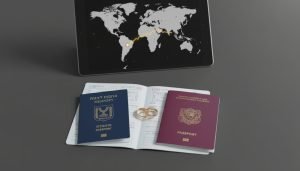
For foreign nationals and multi-jurisdictional couples, navigating the legal requirements for marriage in Israel presents a complex and often confusing challenge. Questions surrounding the absence of civil marriage, the international recognition of your union, and the legal status of mixed-faith partnerships can create significant uncertainty. This complexity demands a clear, authoritative guide to ensure your union is established on a sound legal footing from the outset. Understanding the intricate process of marriage in israel for foreigners is the critical first step toward achieving this security.
This definitive guide is designed to provide that clarity. We will meticulously outline all available pathways, from the state-sanctioned religious ceremonies to the increasingly common and legally recognized civil alternatives performed abroad. You will receive a step-by-step breakdown of the documentation and procedures relevant to your specific situation, empowering you to navigate Israel’s unique legal landscape with confidence and ensure your marriage is validated both in Israel and in your home country.
Key Takeaways
- Grasp the core legal framework: Israel does not perform civil marriages within its borders, delegating jurisdiction for all official ceremonies exclusively to recognized religious courts.
- Discover the most common and practical solution for international couples: obtaining a valid civil marriage abroad, which is then legally recognized by Israel’s Ministry of Interior.
- For many couples, understanding the legal status of “Yeduim B’Tzibur” (common-law marriage) is a critical alternative when navigating the complexities of marriage in Israel for foreigners.
- Prepare for the next steps following your union by understanding the significant legal implications for a foreign spouse regarding immigration status, financial rights, and asset protection.
Understanding Israel’s Unique Marriage Laws: The Religious Framework
Navigating the legal requirements for marriage in Israel demands a comprehensive understanding of its unique framework, which is fundamentally different from that of most Western nations. The State of Israel does not perform civil marriages. Instead, all matters of personal status, including marriage and divorce, fall under the exclusive jurisdiction of recognized religious courts. This system means that the legal validity of a Marriage in Israel is determined by religious law, not civil code. This applies to all citizens and residents, regardless of their personal beliefs. Once a marriage is performed by a recognized religious authority, it is then registered with the Ministry of Interior (Misrad HaPnim), the government body responsible for managing the population registry.
To better understand how this system impacts modern solutions, the following video provides a helpful overview:
The Role of Recognized Religious Courts
The authority to perform legally recognized marriages is delegated to specific religious bodies. Each community has its own court system with distinct rules and eligibility requirements. The primary institutions include:
- The Rabbinical Courts: Holding jurisdiction over Jewish citizens and operating under Orthodox Jewish law (Halakha).
- Sharia Courts: Serving Muslim citizens and applying Islamic law to matters of personal status.
- Ecclesiastical Courts: Presiding over Christian citizens, with different courts for various denominations (e.g., Greek Orthodox, Latin, Armenian).
A critical limitation of this structure is that interfaith marriages cannot be performed within Israel, as each court is only authorized to marry two individuals belonging to its own faith.
Implications for Foreign Nationals
For non-citizens, the process of marriage in Israel for foreigners presents a complex set of challenges. To marry within Israel, a foreign national must adhere to the strict rules of one of the recognized religious courts. This typically involves providing extensive documentation to prove their religious affiliation and personal status, such as official confirmation of being single or legally divorced according to that religion’s laws.
This religious prerequisite creates a significant, often insurmountable, hurdle for many, including secular individuals, interfaith couples, and same-sex couples, for whom there is no internal marriage path. Consequently, navigating the legalities of marriage for foreigners in Israel often requires exploring alternative routes, which this guide will detail in subsequent sections.
Option 1: Religious Marriage in Israel (The Official Path)
In Israel, the authority over marriage and divorce is vested exclusively in the religious courts of recognized communities. This legal framework means that the only way to have a marriage ceremony inside Israel that is legally binding and recognized by the state is through a religious institution. A critical stipulation of this system is that both partners must be registered members of the same recognized faith. This presents a significant regulatory hurdle for interfaith or secular couples, making the process of marriage in israel for foreigners a complex matter to navigate. The absence of a domestic secular option is a foundational aspect of Israeli family law; resources explaining the nuances of Civil Marriage in Israel often detail why many couples ultimately pursue marriage abroad.
The Process for a Jewish Marriage via the Rabbinate
For Jewish couples, the official process is administered by the Chief Rabbinate of Israel. The first step requires the couple to open a marriage file, or ‘Tik Nissuin’, at the local religious council (‘HaMoatza HaDatit’) in the city where they intend to marry. The most demanding aspect for many, particularly those from abroad, is providing definitive proof of Jewish status according to Orthodox law (Halakha). The ceremony is legally formalized with the signing of the ‘Ketubah’ (the Jewish marriage contract) in the presence of two valid witnesses.
Required Documentation for Foreigners
Foreign citizens must compile a comprehensive dossier of official documents, which often require certified Hebrew translation. Navigating this bureaucratic process requires meticulous preparation. Key documents include:
- A valid passport and visa, along with a recent passport-style photograph.
- An original birth certificate, which must be authenticated with an apostille stamp from its country of issue.
- A ‘Certificate of Celibacy’ or ‘Proof of Single Status’ from a competent authority in your home country (e.g., a municipal registrar or embassy), confirming you are legally free to marry.
- If applicable, an official divorce certificate or a former spouse’s death certificate, also bearing an apostille stamp.
Considerations for Other Religions
The state-sanctioned framework for marriage in israel for foreigners also applies to other recognized religious communities, including specific Christian, Muslim, and Druze denominations. For example, Christian foreign nationals must contact their respective church authority, such as the Latin Patriarchate for Roman Catholics or the local Anglican Church leadership, to initiate the process. The documentary evidence required is broadly analogous to that of the Rabbinate, focusing on official confirmation of identity, religious affiliation, and current marital status.
Option 2: Civil Marriage Abroad and Recognition in Israel
For international couples, a civil marriage under a foreign jurisdiction can provide a route to marriage registration in Israel. An entry in the Population Registry must be distinguished from a decision about the marriage’s substantive legal validity and particular rights. The Supreme Court explained that distinction in its 2023 Utah-marriage judgment, paragraph 13. Check the route that applies to your circumstances before relying on registration for a separate legal purpose.
The ‘Cyprus Marriage’ and Other Popular Destinations
Cyprus and other overseas destinations each have their own procedures. An in-person ceremony abroad and a remote foreign-law ceremony follow different requirements. For example, Utah County’s remote ceremony guidance provides for couples to appear by video while the authorized officiant is physically in Utah. Do not assume that every foreign marriage route requires the couple to travel.
- Check the issuing authority’s eligibility, identity, licence and attendance requirements before choosing a route.
- Obtain the required licence and complete the ceremony under that authority’s rules, including any location and witness requirements.
- Obtain the official marriage certificate and arrange the authentication and translation required for its intended use. Check the Israeli registration instructions separately from the foreign ceremony rules.
Registering Your Foreign Marriage in Israel
If your marital status is recorded in Israel’s Population Registry, check the Population Authority’s current change-of-status requirements before applying. The instructions call for identity documents and an original marriage certificate. Foreign certificates require authentication and a notarized Hebrew translation; Arabic certificates do not require translation. An apostille is one authentication route where applicable; otherwise obtain instructions from the Israeli mission in the issuing country. Confirm attendance and any previous-status documents with the office or mission handling your application. Registry entry does not by itself determine every question about the marriage’s legal validity or consequences.
Legal Guidance for a Smooth Process
While the process is well-established, navigating the required international and Israeli bureaucracy can be a complex undertaking, particularly for expats and foreign nationals. Ensuring that all foreign documents are correctly prepared and properly apostilled is a critical step where errors can cause significant delays. Engaging experienced legal counsel is advisable to verify that the chosen country’s marriage process is recognized by Israel, to ensure all documentation is correctly prepared for submission, and to provide guidance through the registration process for a seamless and successful outcome.
Option 3: Common-Law Marriage (Yeduim B’Tzibur)
For international couples residing in Israel who cannot or choose not to pursue formal matrimony, Israeli law provides a significant alternative: recognition as a common-law couple, or Yeduim B’Tzibur (ידועים בציבור). This is not a marriage ceremony but rather a legal status conferred by Israeli courts and administrative bodies upon cohabiting couples who maintain a marital-like relationship. This framework is particularly relevant for those navigating the complex landscape of marriage in Israel for foreigners, as it grants many, though not all, of the rights and obligations afforded to formally married spouses.
How to Qualify for Common-Law Status
Achieving recognition as Yeduim B’Tzibur is contingent upon satisfying two core criteria: managing a joint household and maintaining an intimate, spousal relationship. Unlike some jurisdictions, Israeli law does not mandate a minimum cohabitation period. The key is the ability to demonstrate a genuine, shared life partnership. The burden of proof rests with the couple, who must provide substantial evidence, which can include:
- A shared rental agreement or property deed
- Joint bank accounts and shared financial liabilities
- Testimony from friends, family, and neighbors attesting to the nature of the relationship
- Photographs, travel records, and other documents illustrating a shared life
Rights and Obligations of Common-Law Spouses
The legal status of Yeduim B’Tzibur extends significant protections. Common-law spouses are generally entitled to inheritance rights, pension benefits, and social security (Bituah Leumi) benefits, mirroring those of married couples. Furthermore, property and assets acquired during the relationship are typically subject to the presumption of joint ownership, similar to the marital property regime. Critically for bi-national couples, this status is a cornerstone for visa and residency applications for the foreign partner, providing a recognized legal basis for the relationship with the Ministry of Interior.
Formalizing the Relationship
To provide legal clarity and mitigate future disputes, common-law couples are strongly advised to draft and sign a cohabitation agreement (heskem l’chaim meshutafim). This legally binding document functions as a prenuptial agreement, allowing the couple to define their financial relationship, asset division, and other arrangements. Additionally, couples should register their status with the National Insurance Institute (Bituah Leumi) to ensure access to social benefits. Navigating the legal requirements for these agreements requires specialized expertise. For professional guidance in drafting a robust cohabitation agreement, you can request a confidential case review.
Legal Implications and Next Steps for Foreign Spouses
Successfully completing the marriage ceremony is a significant milestone, but it marks the beginning-not the end-of the legal journey for an international couple. Understanding the subsequent legal consequences is paramount. The complexities of marriage in Israel for foreigners demand a clear and strategic approach to the critical areas of immigration, financial rights, and long-term asset protection. Failure to properly navigate these steps can lead to significant future complications, jeopardizing both your status in the country and your financial security.
Visa and Status in Israel for the Foreign Spouse
Marriage to an Israeli citizen initiates a gradual, multi-year process for the foreign spouse to obtain legal status, which may ultimately lead to citizenship. This procedure is managed by the Ministry of Interior (Misrad HaPnim) and involves comprehensive document submission, background checks, and interviews designed to verify the authenticity of the relationship. The specific requirements and timeline can differ significantly depending on whether the union is a formally recognized marriage or a common-law partnership, making expert guidance essential from the outset. For those exploring various long-term residency options beyond spousal visas, you can read more about different pathways available globally.
Protecting Your Assets with a Prenuptial Agreement
Under Israeli law, the default principle is that all assets and income acquired by either spouse during the marriage are considered joint property, subject to equal division upon dissolution. For international couples, a prenuptial agreement is an indispensable tool for protecting pre-marital assets, inheritances, or specific business interests. It is critical that this agreement is a sophisticated, cross-border document, drafted to be enforceable in both Israel and the foreign spouse’s home jurisdiction. This foresight provides crucial clarity and protection should you ever face divorce or separation.
Consulting with a Cross-Border Family Lawyer
Navigating the intersection of Israeli and international family law requires specialized expertise. An experienced cross-border family lawyer provides indispensable guidance, advising on the most strategic path for your marriage in Israel for foreigners and ensuring your rights are protected under multiple legal systems. From managing the intricate visa application process to drafting a robust, multi-jurisdictional financial agreement, professional legal counsel is vital for securing your future. To understand how these complex laws apply to your unique situation, we invite you to Schedule a Confidential Case Review to assess your legal needs.
Navigating Your Cross-Border Union with Confidence
As we have detailed, the legal framework governing marriage in israel for foreigners is uniquely complex, shaped by the interplay of religious and civil law. Whether pursuing a religious ceremony within the country, obtaining a civil marriage abroad for subsequent recognition, or establishing a common-law union (Yeduim B’Tzibur), each pathway presents distinct legal implications and procedural requirements that demand careful consideration.
Protecting your rights and securing your future requires strategic legal counsel. ICBFL provides independent advisory and informational support for families dealing with matters involving Israel and another country. Share the essentials of your situation so we can help you understand the next step and, where appropriate, connect you with independent licensed counsel. Request a confidential case review. Take the definitive next step toward building your life together in Israel.
Frequently Asked Questions About Marriage in Israel for Foreigners
Can two non-Israeli foreigners get married in Israel?
Direct civil marriage in Israel for two non-Israeli citizens is not available, as all state-sanctioned marriages fall under religious authority. The established and legally recognized alternative involves conducting a civil ceremony in a foreign jurisdiction and subsequently registering that marriage with the Israeli Ministry of Interior. This process is a standard pathway for foreigners seeking to formalize their union while residing in Israel, making marriage in Israel for foreigners a multi-step, cross-border procedure.
Will my marriage performed abroad be recognized in my home country, like the US?
Typically, a marriage legally performed in one sovereign jurisdiction and subsequently registered in Israel is recognized in other countries, including the United States, under the principle of comity. Provided the marriage does not violate the public policy of your home country, such as age of consent laws, the foreign marriage certificate serves as valid proof of the union. It is advisable, however, to consult with legal counsel in your home jurisdiction to confirm specific recognition requirements.
What happens if one partner is Jewish and the other is not? What are our options?
In instances of interfaith couples where one partner is Jewish and the other is not, the Israeli Chief Rabbinate will not conduct the marriage ceremony. The established legal pathway for such couples is identical to that for non-Jewish foreigners: obtaining a civil marriage certificate from an overseas jurisdiction, such as Cyprus or the Czech Republic. This foreign marriage can then be registered with Israel’s Population and Immigration Authority, providing a recognized legal status for the couple within Israel.
What is an ‘apostille’ and why do I need it for my documents?
An apostille authenticates a public document for use under the applicable Hague Convention arrangements. It is an authentication step, rather than a ruling on the marriage’s legal consequences. For Israeli registration, check the current certificate, translation and authentication requirements. If the certificate cannot be authenticated by apostille, ask the Israeli mission in the issuing country about the required authentication route.
How long does it take to register a foreign marriage in Israel?
Ask the Population Authority office or Israeli mission handling your application for its current expected processing time. Prepare the original certificate, required authentication, translation and identity documents before applying, and allow for any further document requests. The current Population Authority service page explains the filing requirements and channels; it does not state a general 45–60-day completion period.
Does a common-law partnership give me the same rights as a formal marriage?
While Israel recognizes common-law partnerships (known as “Yeduim B’Tzibur”), this status does not confer the exact same rights as a formal, registered marriage. Common-law partners are granted many similar entitlements regarding social security, inheritance, and tax benefits. However, certain legal and bureaucratic processes, especially those related to immigration and obtaining automatic legal status for a foreign partner, can be significantly more complex and prolonged compared to those for formally married couples.
Is same-sex marriage legal in Israel?
Israel does not perform same-sex marriages within its borders, as the state has not legalized civil marriage and all unions are managed by religious authorities. However, the state fully recognizes same-sex marriages that are legally conducted in foreign jurisdictions. A couple married abroad can register their union with the Ministry of Interior, and upon registration, they are afforded nearly all the same legal rights and spousal recognition as any other married couple in Israel.