This article is published on an independent advisory platform and does not imply an attorney-client relationship. Information provided is for educational purposes only and does not constitute legal advice.
The lawyer who speaks the most fluent English might actually be the most dangerous choice for your international divorce. When comparing hait family law vs other expat lawyers, many people assume that language skills are the primary factor. However, a strategy that works in a US court can fail spectacularly when it meets the Israeli Rabbinical Court system. You’re likely feeling the weight of this decision, especially if you’re worried about multi-jurisdictional child custody or the potential loss of assets across borders.
We understand that the complexity of two legal systems feels like a trap. This article will help you learn how to evaluate international family law representation so you can ensure your US-Israel legal strategy protects your long-term interests. We’ll look at why a deep understanding of both cultural backgrounds and technical requirements like mirror orders is essential for your peace of mind. You’ll gain a clear framework for choosing a partner who can bridge the gap between IL and the US without compromising your rights.
Key Takeaways
- Understand the critical difference between local practitioners and specialists who focus on the friction between Israeli civil, religious, and international laws.
- Discover why a strategy-first approach prevents a “race to court” that can lead to unintended jurisdictional consequences for your assets and custody.
- Evaluate the differences between hait family law vs other expat lawyers by comparing their specific experience in the US-Israel corridor against general international practices.
- Learn five essential questions to ask any prospective lawyer to ensure they have the technical knowledge to handle cross-border asset division and mirror orders.
- Identify how an initial confidential case review reveals hidden risks early, allowing you to move forward with a clear, informed legal strategy.
This article is published on an independent advisory platform (not a law firm) and must not imply an attorney-client relationship. Information provided is for educational purposes only and does not constitute legal advice. Legal services are only provided by licensed attorneys under a separate engagement.
What defines a cross-border family lawyer in Israel?
Cross-border family law serves as a bridge between two sovereign legal systems, ensuring that legal actions in one country remain valid and enforceable in another. A lawyer specializing in this field manages cases involving multiple jurisdictions, such as Israel and the US. They don’t just look at one set of rules; they must understand the constant interplay between Israeli civil law, religious law, and international treaties. This specialized knowledge is essential for handling complex matters like the Hague Abduction Convention and the enforcement of international support orders.
When you begin evaluating hait family law vs other expat lawyers, you’ll find that the scope of the work is much broader than a standard domestic case. A cross-border practitioner identifies potential conflicts between the two systems early on. They look for ways to harmonize your legal standing in both IL and the US, preventing situations where a “win” in one court leads to a “loss” in another. This high-level coordination is what separates a generalist from a true international specialist.
The difference between local and international focus
Domestic lawyers focus on the precedents and dynamics within the Israeli court system. They’re experts at navigating the local landscape. However, an international specialist looks at how an Israeli ruling affects your status in the US. In this context, IL refers specifically to Israel. For example, a local lawyer might secure a custody order that works in Tel Aviv but fails to meet the requirements for a “Mirror Order” in a US state court. A cross-border focus ensures that your rights are protected regardless of which country you’re in.
Why bilingualism is only the starting point
Speaking English is necessary for communication, but it’s not enough to manage a multi-jurisdictional divorce. A true expat lawyer understands the cultural nuances of the Anglo community in Israel. They know that expats often have different expectations regarding child custody and asset division than those raised entirely within the Israeli system. When weighing hait family law vs other expat lawyers, look for practitioners who have a deep understanding of both legal landscapes. This ensures they can explain the systemic differences in plain English and help you make informed choices that protect your long-term interests.
Evaluating the Strategy-First vs. Litigation-First approach
Many attorneys operate on a litigation-first basis. They believe that filing as quickly as possible is the only way to “win” the race for jurisdiction. This approach often leads to high-stress environments and immediate conflict. In contrast, a strategy-first advisory model focuses on the long-term impact of early legal moves before any papers are signed. When weighing hait family law vs other expat lawyers, it’s vital to consider whether your representative is rushing you into a courtroom or helping you see the full picture.
Early decisions in US-Israel cases often have permanent consequences for asset division and parental rights. If you file in a specific court without considering the international implications, you might lose the ability to protect assets located in the United States. The goal of a strategic approach is to provide total clarity before you make a formal commitment to the court process. This ensures that every move you make is calculated to protect your interests in both IL and the US.
The risks of rushing into the Israeli court system
In Israel, the choice between filing in the Rabbinical Court or the Family Court is a critical first move. Rushing into the Rabbinical system might seem advantageous for certain outcomes, but it can trigger retaliatory filings in the United States. This creates a “race to the courthouse” that drains financial resources and escalates emotional tension. Following U.S. State Department guidance on international disputes is helpful for understanding how these battles can spiral. A calm, neutral assessment of your specific family situation ensures you don’t make a move you’ll regret later.
Building a multi-jurisdictional legal roadmap
A roadmap identifies which assets fall under Israeli law and which are governed by US state law. Local Israeli lawyers often overlook the US context, such as how a 401(k) or a property in Florida should be handled. A comprehensive roadmap prevents conflicting orders from two different countries, which can be nearly impossible to resolve once they’re issued. By mapping out the interplay between systems, you reduce the risk of asset loss and jurisdictional confusion. Before you decide on a path, it’s wise to request a confidential assessment of your cross-border situation. This roadmap serves as your guide through the complexity of two legal landscapes.
Hait Family Law vs. other expat lawyers: A comparison
When you evaluate hait family law vs other expat lawyers, the most significant difference is the depth of specialization within the US-Israel corridor. Many general expat lawyers maintain a broad international practice, handling cases across multiple continents. While this provides a wide perspective, it often lacks the granular expertise required for the unique friction between Israeli and American legal systems. A specialized focus ensures that every strategic move accounts for the specific treaties and procedural hurdles that only exist between these two nations.
The structure of the legal team also plays a critical role in your outcome. Solo practitioners often provide a personal touch but may lack the resources to manage complex, multi-jurisdictional evidence or coordinate with US-based professionals. Integrated cross-border teams offer a more robust framework, ensuring that your strategy is consistent across both borders. This collaborative approach is essential when dealing with the Hague Convention or high-stakes custody disputes, where timing and coordination are everything.
Communication styles vary significantly between firms. You’ll find many lawyers who lead with aggressive representation, promising to fight every battle in court. While this feels proactive, it often leads to escalating costs and emotional exhaustion. A calm, advisory guidance model prioritizes conflict reduction and informed decision-making. By focusing on strategy before litigation, you gain a clearer understanding of your risks without the pressure of an immediate courtroom battle.
Specialization in the US-Israel legal bridge
Understanding the specific US-Israel tax treaty is vital for any divorce settlement involving cross-border assets. A generalist might overlook how the division of a US-based retirement account or property affects your tax liability in IL. Experience with the enforcement of US child support orders within the Israeli system is another key differentiator. This specialized knowledge is particularly critical in international custody relocation cases, where the legal requirements for moving a child are strictly enforced by both countries.
The advisory platform vs. the traditional law firm
An independent advisory platform functions differently than a traditional law firm. It provides a neutral space to develop a comprehensive strategy before you commit to hiring a litigator for court appearances. The role of the advisor is to vet local counsel, ensuring they have the specific skills needed for your particular case dynamics. This model offers high transparency in pricing and a clear “how it works” process, which helps international families manage their financial expectations. By separating the strategic planning from the courtroom fighting, you ensure that your long-term interests remain the primary focus.
5 Critical questions to ask before hiring an expat lawyer
Choosing the right representative requires more than a simple Google search. When you look at hait family law vs other expat lawyers, the quality of the questions you ask determines the quality of the strategy you receive. You need a professional who can navigate the specific friction between US and Israeli law without causing unnecessary conflict. Before you sign an engagement letter, use these five questions to vet your potential representative:
- How many cases have you handled specifically involving US-Israel asset division? You need to know if they understand how to handle a US-based 401(k) or real estate in a way that the Israeli court will recognize.
- What is your strategy for preventing a jurisdictional battle between two countries? A rush to file can trigger expensive litigation in both IL and the US; ask how they plan to keep the case in the most favorable venue.
- Do you have a network of US-based professionals to assist with state-side legal needs? Cross-border cases often require coordination with US tax experts or local counsel to handle assets governed by US state law.
- Can you explain the difference between Israeli and US custody laws in plain English? They should be able to explain concepts like “Mirror Orders” and how they ensure your parental rights are enforced in both countries.
- How do you handle the enforcement of foreign judgments in Israel? Israel maintains a pro-enforcement presumption for foreign judgments, but the process requires specific technical steps that a generalist might miss.
Uncovering the depth of international expertise
Speaking English is a baseline requirement, not a qualification. A complex divorce involves more than just translation. You should test the lawyer’s knowledge of the Hague Abduction Convention and how it’s applied within the Israeli court system. An expert understands the cultural expectations of Anglo clients and knows that your priorities might differ from those of a local Israeli. If they can’t explain how a move affects your status in the US, they aren’t a true cross-border specialist.
Assessing the lawyer’s commitment to strategy
Watch for red flags during your initial meeting. Does the lawyer suggest immediate filing to “beat” the other party, or do they propose a period of strategic assessment? A strategy-first approach involves coordinating with your existing US-based legal or financial team to ensure your global interests are protected. This level of coordination is a primary differentiator when comparing hait family law vs other expat lawyers. You should prioritize clarity over a promise of “winning.” To start building your own roadmap, you can contact us for a confidential assessment of your situation.
This article is published on an independent advisory platform and does not imply an attorney-client relationship. Information provided is for educational purposes only and does not constitute legal advice. Legal services are only provided by licensed attorneys under a separate engagement.
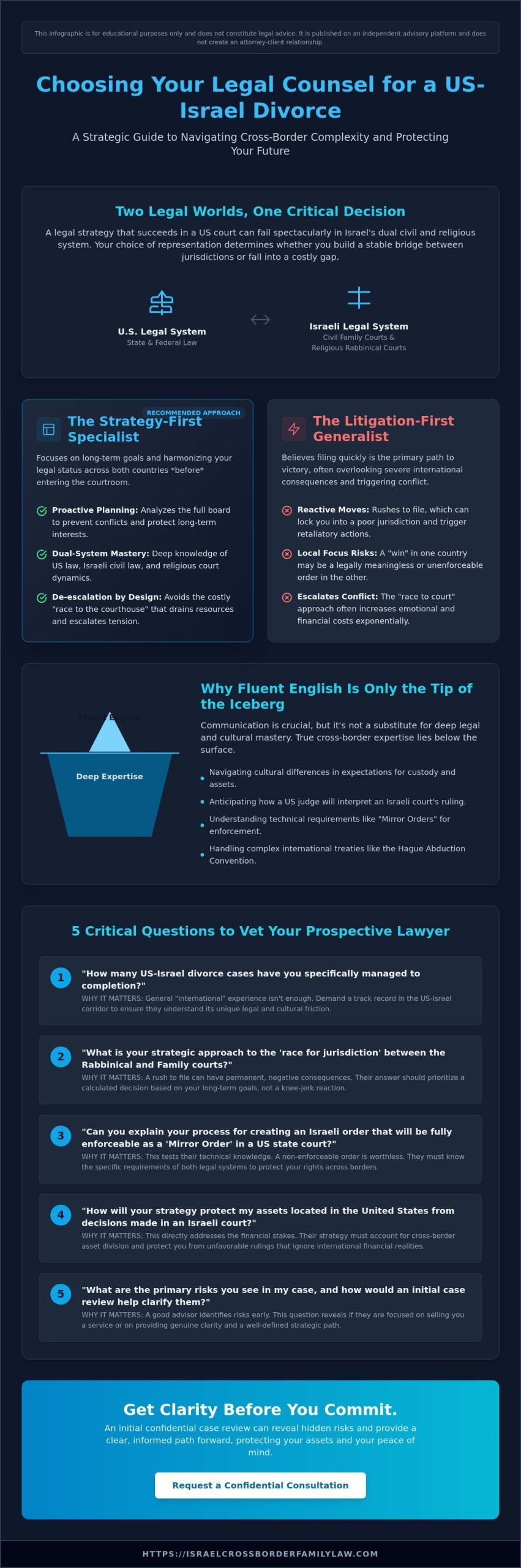
Finding clarity: The strategic path for US-Israel families
Families moving between the US and Israel often find themselves caught between two distinct legal worlds. This isn’t just about local regulations; it’s about how your life in a high-tech innovation hub like Israel connects back to your established interests in global markets like the US. Finding clarity requires a strategic path that accounts for both systems simultaneously. When you evaluate hait family law vs other expat lawyers, the focus shifts from simple courtroom tactics to long-term global stability.
A strategic path identifies hidden risks before they become permanent legal problems. The advisory model reduces the emotional and financial cost of cross-border conflict by preventing unnecessary litigation from the start. It acts as a steady guide, helping you understand the systemic differences in the Israeli landscape before you make a commitment. By prioritizing strategy, you ensure that your legal plan works as a bridge rather than a barrier between your two lives.
The role of the CrossBorder advisory platform
This platform provides strategic guidance rather than formal legal representation. It offers an independent perspective that is often missing when you speak directly to a litigator who might be focused only on the next court date. You can access specialized divorce and separation resources for international families to better understand your options. This approach ensures that you make informed choices based on a comprehensive strategy rather than a fear of the Israeli Rabbinical Court system. An independent advisor helps you vet the right professionals for each specific jurisdiction, ensuring your team is aligned with your global goals.
Next steps for international families in Israel
Protecting your children and assets starts with a strategy-first mindset. Seeking a confidential case review early in the process allows you to map out your global interests and identify potential jurisdictional friction. This roadmap reduces the high stress associated with multi-jurisdictional custody and potential asset loss. Once you have a clear plan, you can move forward with the confidence that your lawyer understands your cultural background and the complexities of your international life.
Get clarity before you commit. We invite you to reach out for a confidential advisory call or message us via WhatsApp to discuss your strategic options.
Securing your global future with strategic clarity
Choosing the right path for your family requires looking beyond simple bilingual communication. When comparing hait family law vs other expat lawyers, the primary differentiator is a specialized focus on the Anglo community in Israel and decades of experience in the specific US-Israel legal corridor. You’ve seen how a strategy-first mindset protects your assets and parental rights from the risks of conflicting jurisdictional orders between IL and the US.
Our authoritative YouTube resource offers further insights into these complex systemic differences. By identifying hidden risks early, you can navigate the Israeli landscape with a clear, informed roadmap. This proactive planning reduces conflict and ensures your long-term interests remain the priority. Moving forward with a defined strategy provides the peace of mind you need during a challenging transition.
Get clarity before you commit. Request a confidential consultation.
This article is published on an independent advisory platform and does not imply an attorney-client relationship. Information provided is for educational purposes only and does not constitute legal advice. Legal services are only provided by licensed attorneys under a separate engagement.
Frequently Asked Questions
What is the main difference between Hait Family Law and a standard Israeli lawyer?
Standard Israeli lawyers typically focus on domestic precedents and the local court environment. The primary difference is the specialized focus on the US-Israel corridor. When comparing hait family law vs other expat lawyers, you’ll find a focus on how Israeli rulings impact your legal status, taxes, and assets in the United States. This includes managing multi-jurisdictional complexity that a domestic-only practitioner might overlook.
Can a US-based lawyer handle my family law case in Israel?
A US-based lawyer cannot represent you in an Israeli courtroom. Legal representation in IL requires a license from the Israel Bar Association. However, US lawyers play a critical role by providing the “Expert Opinion on Foreign Law.” Israeli courts often require this formal document to validate US wills or explain specific state laws regarding asset division and inheritance.
How does the Israeli Rabbinical Court affect US citizens living in Israel?
The Rabbinical Court has exclusive jurisdiction over the marriage and divorce of Jewish residents in IL. US citizens may find that their divorce requires a religious writ, known as a “Get,” even if they married in a civil ceremony abroad. If a spouse files in the Rabbinical system first, that court may also gain authority over alimony and child custody matters through a process called “bundling.”
Is it possible to enforce a US child support order in Israel?
You can enforce a US child support order through the Israeli system. Israel follows a pro-enforcement presumption for foreign judgments provided they meet the criteria of the Foreign Judgments Enforcement Law. This ensures that support obligations remain valid when a parent moves across international borders, though it requires a specific petition for recognition in an Israeli court.
What should I do if my spouse threatens to take our children to the US without my consent?
You should immediately seek a preventative “stay of exit” order from the Family Court. Unilateral relocation of a child to the US without your written consent is considered international child abduction under the Hague Convention. Taking this early action prevents the child from leaving IL while a formal legal strategy is developed to protect your parental rights.
Why is a strategy-first approach better than immediate litigation?
A strategy-first approach identifies hidden risks before they trigger an expensive jurisdictional battle. Immediate litigation often forces the other party to file a retaliatory case in the US, which can double your financial and emotional costs. Evaluating hait family law vs other expat lawyers shows that a strategic roadmap provides clarity and helps prevent conflicting orders from two different countries.
Does Hait Family Law provide legal representation in US courts?
Legal representation is provided for the Israeli jurisdiction only. While the team coordinates closely with your existing US-based legal and financial professionals, they do not appear in US courtrooms. The goal is to ensure your Israeli legal strategy aligns with your US interests to prevent jurisdictional friction and protect your global assets.
How does the “CrossBorder” advisory platform differ from a traditional law firm?
Traditional law firms are often transactional and focus on specific court filings and appearances. The advisory platform provides a neutral space to develop a comprehensive global roadmap before you commit to a specific litigator. This model allows you to vet local counsel based on their technical experience with US-Israel asset division and international custody requirements.
Get clarity before you commit. Request a confidential consultation.

Article by
Gabriel Lior
A Personal Journey That Became a Mission
The advisory was founded by an American father Gabriel Lior, LLB, MBA , global entrepreneur, and cross-border advisor who spent more than a decade navigating the Israeli family court system firsthand and now lives in Singapore with his son.
As a divorced parent in a cross-border family, Gabriel faced nearly every legal challenge a foreign parent can encounter in Israel — including child custody disputes, child support proceedings, property matters in Israel and abroad, false accusations, and complex immigration and relocation proceedings.
Over the years, he learned the hard way how difficult it is for non-Israeli parents to understand the system, identify the right legal strategy, and choose the right legal representation — especially when language, culture, and jurisdictional differences are involved. He also witnessed how foreign parents and new immigrants are often disadvantaged or taken advantage of by service providers and institutions simply because they lack local knowledge or fluency.
From Client to Advisor
To truly understand — and survive — the system, Gabriel pursued formal legal education in Israel, completing two Israeli law degrees, alongside a BA and MBA earned in the United States. This was never about becoming a practicing attorney, but about gaining a deep, structural understanding of how the system works — and where it breaks down for foreign parents.
This rare combination of:
Firsthand client experience
Israeli legal and US business education
International business and negotiation training
Decades of commercial execution
created a unique perspective – one that understands both sides of the table.
After years of litigation, persistence, and at times self-representation, he ultimately succeeded in securing custody of his son and relocating abroad through a rare legal victory in the Israeli Supreme Court — becoming one of the first fathers in Israel to do so under these circumstances.
Disclaimer
Important Disclaimer:
The information provided on this website and in its content is for general informational and educational purposes only and does not constitute legal advice, legal opinion, or legal representation.
Gabriel Lior is not licensed to practice law in Israel (nor is he interested in doing so) and does not provide legal services, despite having completed 2 Law Degrees. The services offered are advisory in nature and are intended to provide general guidance, strategic insight, and information regarding cross-border family law considerations.
No attorney-client relationship is formed by accessing this website, reading its content, or communicating with us.
Any decisions made based on this information are at your own discretion and risk. For legal advice specific to your situation, you should consult a licensed attorney in the relevant jurisdiction.
Where appropriate, we may refer clients to independent, licensed attorneys or professionals. Such referrals do not constitute legal representation and no liability is assumed for services provided by third parties.