This article is published on an independent advisory platform and is not a law firm. The content provided is for informational and advisory purposes only and does not constitute an attorney-client relationship or legal advice.
The most critical factor in choosing a cross-border lawyer isn’t just their courtroom record; it’s their ability to act as a cultural and legal bridge between two very different systems. Many international families looking for Jay Hait reviews are trying to determine if a practitioner truly understands the “Anglo” perspective while operating within the often aggressive Israeli legal landscape. You likely feel a sense of anxiety regarding language barriers in court or the confusing way US and Israeli laws interact, especially with the 2026 reporting changes for foreign assets.
It’s completely normal to feel overwhelmed by the “race to jurisdiction” or the nuances of the Rabbinical Courts. We agree that when your family’s future and global assets are at stake, clarity is more valuable than any sales pitch. This article offers an objective look at client experiences and the strategic approach Jay Hait employs in US-Israel matters. We’ll preview how his tactical methods address the specific pains of expats, from managing 401(k) visibility under new tax rules to ensuring your voice is heard in an unfamiliar court system.
Key Takeaways
- Learn why reputation is the primary currency for international families and how to distinguish between general feedback and specialized cross-border expertise.
- Identify the specific communication traits, such as patient and multi-option strategies, that clients highlight when navigating high-stress divorce or estate matters in Israel.
- Gain an understanding of how Jay Hait reviews reflect a tactical grasp of the interplay between Rabbinical and Civil court systems, which is essential for managing jurisdictional disputes.
- Discover a practical framework for evaluating counsel by identifying mentions of complex scenarios like dual citizenship and assessing the practitioner’s “communication rhythm.”
- Understand the “Clarity Before Commitment” philosophy and why independent research is the first step toward developing a tailored legal strategy.
This article is published on an independent advisory platform and is not a law firm. The content provided is for informational and advisory purposes only and does not constitute an attorney-client relationship or legal advice.
Understanding the Role of Reputation in Israel-US Legal Matters
Reputation serves as the primary currency within the Israeli legal system, particularly for families managing assets or custody across borders. In Israel, the legal community is relatively small and highly interconnected. A practitioner’s standing with judges and opposing counsel often dictates the tone of negotiations before a single document is filed. For international families, searching for Jay Hait reviews is an essential step in verifying that their representative possesses the professional gravity required to handle complex disputes. This is especially true in high-stakes matters involving the Hague Convention on International Child Abduction, where a lawyer’s credibility across jurisdictions can influence the speed of a resolution.
To better understand the impact of personal advocacy in the Israeli context, watch this helpful video:
There is a distinct difference between “local” feedback and “cross-border” specialized feedback. A local review might focus on how quickly a simple contract was signed. However, international families require feedback on how a lawyer manages the friction between US and Israeli statutes. With the Israeli divorce rate rising by 6.5% in 2024, the demand for practitioners who understand the nuances of divorce and separation for international families has never been higher. A lawyer’s standing in both the US and Israel impacts negotiations by signaling to the other side that your counsel understands the global implications of every decision, from tax disclosures to property division.
The “Anglo” Factor in Israeli Law
Native English proficiency is cited in almost every review for a reason. It isn’t just about the ability to speak the language; it’s about cultural alignment. For an expat, the aggressive nature of the Israeli courtroom can be jarring. Reviews often highlight how a “Western” communication style helps reduce the inherent stress of international litigation. This alignment ensures that the client’s goals aren’t lost in translation when moving between the informal Israeli style and the more structured expectations of US-based clients.
Transparency and Ethical Standards
A common anxiety for those unfamiliar with the Middle Eastern legal landscape is the fear of encountering “untrustworthy” or opaque practices. Jay Hait reviews frequently point to a predictable, formal corporate tone that resonates with professionals used to US standards. His public commentary on ethics and transparency shapes a professional reputation built on reliability. For clients dealing with the new 2026 tax disclosure rules for Olim, having a representative who prioritizes ethical clarity over aggressive shortcuts provides a necessary sense of security during a turbulent time.
This article is published on an independent advisory platform and is not a law firm. The content provided is for informational and advisory purposes only and does not constitute an attorney-client relationship or legal advice.
Key Themes in Client Feedback: What International Families Value
When analyzing Jay Hait reviews, a recurring theme is the emphasis on patient and sympathetic communication during high-stress family law matters. For many expats, a divorce or estate case isn’t just a legal file; it’s a life-altering event occurring in an unfamiliar culture. A successful cross-border strategy is the integration of two distinct legal systems, ensuring that actions taken in Israel don’t negatively impact a client’s standing or assets in the US. This holistic view is often what separates specialized counsel from general practitioners.
Consistency in keeping clients informed across different time zones is another value frequently cited by international families. Living abroad while a case proceeds in Israel (IL) creates natural anxiety. Feedback suggests that maintaining a steady flow of updates is a core part of the practice’s rhythm. This reliability helps bridge the gap for those who cannot be physically present for every hearing. It provides a necessary layer of reassurance that the case is moving forward according to a well-defined plan.
Strategic Versatility
Reviews often mention “multiple paths” provided during initial assessments, giving clients a choice in how to proceed. Having a choice of strategy is vital for international asset protection, especially when navigating the interplay between US and Israeli laws. This flexibility ensures that clients can weigh the risks of different approaches before committing. You can find more detail on this process by reviewing how it works.
Supportive Professional Environment
The role of the wider legal team, including Osnat, Sivan, and Lesley, is frequently cited as a key factor in client satisfaction. A “human side” to legal interactions helps prevent the burnout many expats experience when facing the Israeli bureaucracy. This supportive environment is particularly important for remote clients who rely on the administrative staff to manage the complexities of the system. If you are starting to research your options, you might find it helpful to request a confidential case review to see how these themes apply to your matter.
This article is published on an independent advisory platform and is not a law firm. The content provided is for informational and advisory purposes only and does not constitute an attorney-client relationship or legal advice.
Bridging the Gap: How Cross-Border Expertise Translates into Results
Success in international legal matters isn’t just about winning a case; it’s about navigating the “race to jurisdiction.” This term refers to the strategic decision of where to file a case first. In Israel (IL), family matters can be heard in either the Civil Family Court or the Rabbinical Court. Jay Hait reviews often highlight his tactical understanding of these two distinct systems. For an international family, choosing the wrong court can have long-lasting consequences on property division or child support. A lawyer’s ability to anticipate how each court will react to a specific set of facts is a significant advantage.
Understanding the interplay between US law and Israeli statutes is crucial for achieving a balanced outcome. Many families seek guidance on divorce for international families because they realize a standard local lawyer might not grasp the complexities of foreign assets or 401(k) accounts. Feedback from clients suggests that having counsel who can explain how an Israeli court order might be viewed by a US judge provides a layer of security that local firms often lack. This perspective is vital when managing a life that spans two countries.
Hague Convention and International Custody
Child relocation or abduction cases are among the most stressful legal challenges a parent can face. Specialized reviews are necessary in these scenarios because the Hague Convention on Child Abduction involves strict timelines and specific legal requirements. Reviews reflect a pattern of success in these cases by focusing on the intersection of US federal law and Israeli local statutes. This expertise ensures that parental rights are protected across borders. It also helps in minimizing the trauma for the children involved by seeking the most efficient legal path.
Estate Planning and Asset Protection
Feedback on “Future Planning” often mentions the necessity of dual-country wills. With the new 2026 reporting rules requiring Olim to disclose foreign assets to the Israel Tax Authority, estate planning has become significantly more complex. Cross-border complexity is a theme identified by many clients who want to ensure their assets on two different continents are protected. A properly structured will prevents the confusion that arises when different legal systems attempt to govern the same inheritance. This foresight offers peace of mind to families who want to secure their legacy across jurisdictions without leaving behind a legal mess.
This article is published on an independent advisory platform and is not a law firm. The content provided is for informational and advisory purposes only and does not constitute an attorney-client relationship or legal advice.
Evaluating Legal Counsel: Moving Beyond Star Ratings
A simple five-star rating rarely tells the whole story for an international family. When you analyze Jay Hait reviews, you should look for specific markers that indicate a practitioner’s ability to handle multi-jurisdictional friction. High-level star ratings are a starting point, but the substance of the feedback provides the necessary context for complex cases involving dual citizenship or Aliyah. To make an informed choice, follow a structured evaluation process that prioritizes your unique cross-border needs.
- Check for specific scenarios: Look for mentions of Aliyah, dual citizenship, or foreign asset disclosure. These indicate the lawyer has actual experience with the 2026 reporting requirements and US-Israel tax treaties.
- Assess the communication rhythm: Does the feedback mention consistent updates across time zones? For families living in the US while a case proceeds in Israel (IL), a predictable “rhythm” of communication is more valuable than occasional bursts of activity.
- Verify market presence: Ensure the counsel has a deep understanding of both the US legal culture and the Israeli system. This dual-market presence is essential for expats and foreign nationals who need a bridge between two worlds.
- Balance strategy and advocacy: Evaluate whether reviews praise strategic negotiation or just raw aggression. In international family law, a lawyer who can negotiate a settlement often saves the client more than one who only knows how to fight.
The Importance of Early Decisions
Many reviews highlight how the first 30 days of a case can change everything. For an Anglo family unfamiliar with the Israeli system, the initial steps are often the most dangerous. Early strategic clarity often dictates the final outcome. If you don’t secure the right jurisdiction or file the correct motions immediately, you may spend months or years trying to correct those initial errors. Feedback from successful clients often points to the value of having a clear roadmap from day one.
Identifying “Red Flags” in Legal Representation
It’s vital to contrast Jay Hait reviews with the general “aggression-based” approach common in many Israeli law firms. While a “tough” lawyer sounds appealing, “winning at all costs” can be a significant liability in international family law. Excessive aggression often triggers retaliatory legal actions in foreign courts, leading to a cycle of expensive litigation that depletes family assets. A calm and authoritative presence in court is usually more effective at gaining a judge’s respect than shouting. Choosing a strategist over a “pitbull” is often the difference between a resolved case and a financial disaster. If you’re ready to move beyond general research, you can speak with an advisor about your case strategy.
This article is published on an independent advisory platform and is not a law firm. The content provided is for informational and advisory purposes only and does not constitute an attorney-client relationship or legal advice.
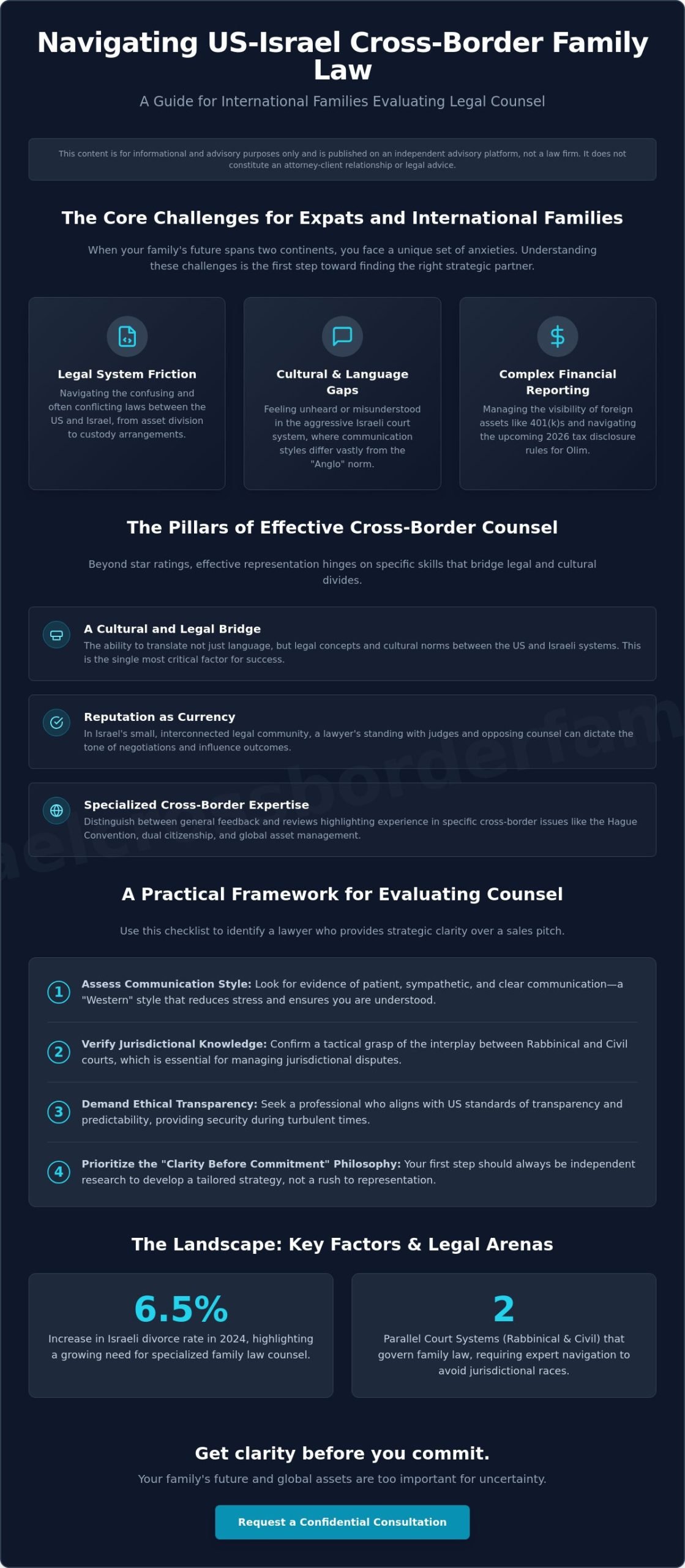
Taking the Next Step: From Research to Strategy
Reading Jay Hait reviews provides a window into the experiences of other international families, but it’s only the first step in the “Clarity Before Commitment” process. Reviews help you verify a practitioner’s reputation and cultural fit. However, every cross-border case has unique variables, from the specific state of your US assets to the timing of your Aliyah. Moving from general research to a tailored strategy requires a shift in focus. You must move from looking at what happened for others to determining what needs to happen for your family.
It’s vital to understand the difference between general information and a specific legal engagement. This article and the reviews you read are educational tools designed to help you navigate the Israeli legal landscape. A formal legal engagement only begins after a separate agreement is signed with a licensed attorney. To prepare for a confidential case review, you should gather relevant documents such as existing prenuptial agreements, lists of foreign assets, and any previous court filings from either the US or Israel (IL).
Resource Integration
We encourage you to use all available educational tools before making a decision. Watching videos on the Israel Family Law YouTube channel can help you visualize the process and hear directly about common challenges. Understanding the pricing structure for cross-border services is also a critical part of your research. Transparency in costs prevents surprises later in the process. Seeking an independent advisory call before signing a retainer allows you to test the “communication rhythm” we discussed earlier without an immediate long-term commitment.
Get Clarity Before You Commit
Navigating two distinct legal systems is undoubtedly complex, but it’s entirely possible with the right guide. You deserve a strategy that respects the legal landscapes of both the US and Israel. Early decisions regarding jurisdiction and asset disclosure will impact your family for years to come. By prioritizing strategic clarity now, you reduce the risk of expensive errors later. This advisory platform is here to help you understand those risks honestly and without exaggeration. The goal is to ensure you feel steady and knowledgeable as you move through this challenging transition.
Get clarity before you commit. Request a confidential consultation to discuss your specific situation and begin developing your cross-border strategy.
This article is published on an independent advisory platform and is not a law firm. The content provided is for informational and advisory purposes only and does not constitute an attorney-client relationship or legal advice.
Securing Your Family’s Future Across Borders
Navigating the intersection of US and Israeli law requires more than a standard legal representative; it demands a strategist who understands the cultural and systemic nuances of both nations. As we have explored, the most insightful Jay Hait reviews highlight his ability to act as a cultural bridge, providing international families with the clarity needed to manage complex jurisdictional disputes. By prioritizing early strategic decisions and understanding the interplay between the Rabbinical and Civil court systems, you can protect your assets and parental rights effectively.
Effective advocacy in these matters is built on decades of experience and a deep specialization in US-Israel cross-border family law. With a physical presence in both Tel Aviv and New York, the practice offers a distinct advantage for those managing lives across two continents. As a native English speaker, Jay Hait ensures that your goals are clearly articulated within the Israeli legal landscape. Choosing the right counsel is about finding a guide who respects your “Anglo” perspective while mastering the local system.
Get clarity before you commit. Request a confidential consultation.
Managing a cross-border life is complex, but with the right strategic guidance, you can move forward with confidence and security.
This article is published on an independent advisory platform and is not a law firm. The content provided is for informational and advisory purposes only and does not constitute an attorney-client relationship or legal advice.
Frequently Asked Questions
Is Jay Hait a native English speaker?
Yes, Jay Hait is a native English speaker, which is a primary reason many international families seek his counsel. This proficiency ensures that nuances in communication aren’t lost when translating Western expectations into the Israeli legal environment. Clients often highlight that this cultural alignment significantly reduces the stress of litigation and ensures their voice is accurately represented in court.
Does Jay Hait have experience with the US legal system?
Yes, he possesses extensive experience with the US legal system and maintains a physical presence in New York. This dual-market expertise allows him to understand the global implications of Israeli court decisions on a client’s standing in America. His background is particularly useful for dual citizens and expats who are navigating complex jurisdictional conflicts between the two countries.
What do clients say about Jay Hait’s communication style?
Jay Hait reviews frequently describe his communication style as patient, sympathetic, and highly structured. He is known for providing consistent updates that respect different time zones, which is vital for remote clients. This reliability helps international families feel informed and secure despite being physically distant from the Israeli courts; it provides a necessary layer of reassurance during high-stress cases.
Can Jay Hait handle cases involving assets in both the US and Israel?
He specializes in cases involving assets in both countries, specifically addressing the interaction between US and Israeli property laws. With the 2026 tax disclosure rules requiring Olim to report foreign accounts to the Israel Tax Authority, his strategic approach to asset protection is essential. He helps ensure that settlements in Israel (IL) don’t create unforeseen financial or tax liabilities in the US.
Is a consultation with Jay Hait considered legal advice?
No, a consultation on this independent advisory platform is for informational and advisory purposes only. It does not constitute an attorney-client relationship or formal legal representation. Legal services are only provided by licensed attorneys under a separate, specific engagement. The goal of an advisory call is to help you gain strategic clarity before you commit to a full legal retainer.
Does Jay Hait represent clients in the Israeli Rabbinical Courts?
Yes, he represents clients in the Israeli Rabbinical Courts and understands the tactical “race to jurisdiction.” For Jewish couples, the Rabbinical Courts have exclusive jurisdiction over the act of divorce itself. His experience allows him to navigate the systemic differences between these religious courts and the Civil Family Courts effectively, ensuring that the chosen jurisdiction aligns with the client’s strategic goals.
What is the most common praise found in Jay Hait reviews?
The most common praise found in Jay Hait reviews centers on his role as a “cultural translator” and his ability to offer multiple strategic options. Clients value his calm presence in court and the supportive environment provided by his wider administrative team. This balanced approach helps prevent the burnout often associated with international legal disputes by focusing on strategy rather than just raw aggression.
How does Jay Hait handle international child custody cases?
He handles international child custody cases by applying a deep knowledge of the Hague Convention on Child Abduction. His strategy focuses on the intersection of US federal law and Israeli local statutes to protect parental rights across borders. By managing strict timelines and complex jurisdictional rules, he seeks the most efficient path for the family while minimizing the trauma for the children involved.
Get clarity before you commit. Request a confidential consultation.

Article by
Gabriel Lior
A Personal Journey That Became a Mission
The advisory was founded by an American father Gabriel Lior, LLB, MBA , global entrepreneur, and cross-border advisor who spent more than a decade navigating the Israeli family court system firsthand and now lives in Singapore with his son.
As a divorced parent in a cross-border family, Gabriel faced nearly every legal challenge a foreign parent can encounter in Israel — including child custody disputes, child support proceedings, property matters in Israel and abroad, false accusations, and complex immigration and relocation proceedings.
Over the years, he learned the hard way how difficult it is for non-Israeli parents to understand the system, identify the right legal strategy, and choose the right legal representation — especially when language, culture, and jurisdictional differences are involved. He also witnessed how foreign parents and new immigrants are often disadvantaged or taken advantage of by service providers and institutions simply because they lack local knowledge or fluency.
From Client to Advisor
To truly understand — and survive — the system, Gabriel pursued formal legal education in Israel, completing two Israeli law degrees, alongside a BA and MBA earned in the United States. This was never about becoming a practicing attorney, but about gaining a deep, structural understanding of how the system works — and where it breaks down for foreign parents.
This rare combination of:
Firsthand client experience
Israeli legal and US business education
International business and negotiation training
Decades of commercial execution
created a unique perspective – one that understands both sides of the table.
After years of litigation, persistence, and at times self-representation, he ultimately succeeded in securing custody of his son and relocating abroad through a rare legal victory in the Israeli Supreme Court — becoming one of the first fathers in Israel to do so under these circumstances.
Disclaimer
Important Disclaimer:
The information provided on this website and in its content is for general informational and educational purposes only and does not constitute legal advice, legal opinion, or legal representation.
Gabriel Lior is not licensed to practice law in Israel (nor is he interested in doing so) and does not provide legal services, despite having completed 2 Law Degrees. The services offered are advisory in nature and are intended to provide general guidance, strategic insight, and information regarding cross-border family law considerations.
No attorney-client relationship is formed by accessing this website, reading its content, or communicating with us.
Any decisions made based on this information are at your own discretion and risk. For legal advice specific to your situation, you should consult a licensed attorney in the relevant jurisdiction.
Where appropriate, we may refer clients to independent, licensed attorneys or professionals. Such referrals do not constitute legal representation and no liability is assumed for services provided by third parties.