This article is published on an independent advisory platform and does not constitute legal representation or legal advice. Legal services are only provided by licensed attorneys under a separate engagement.
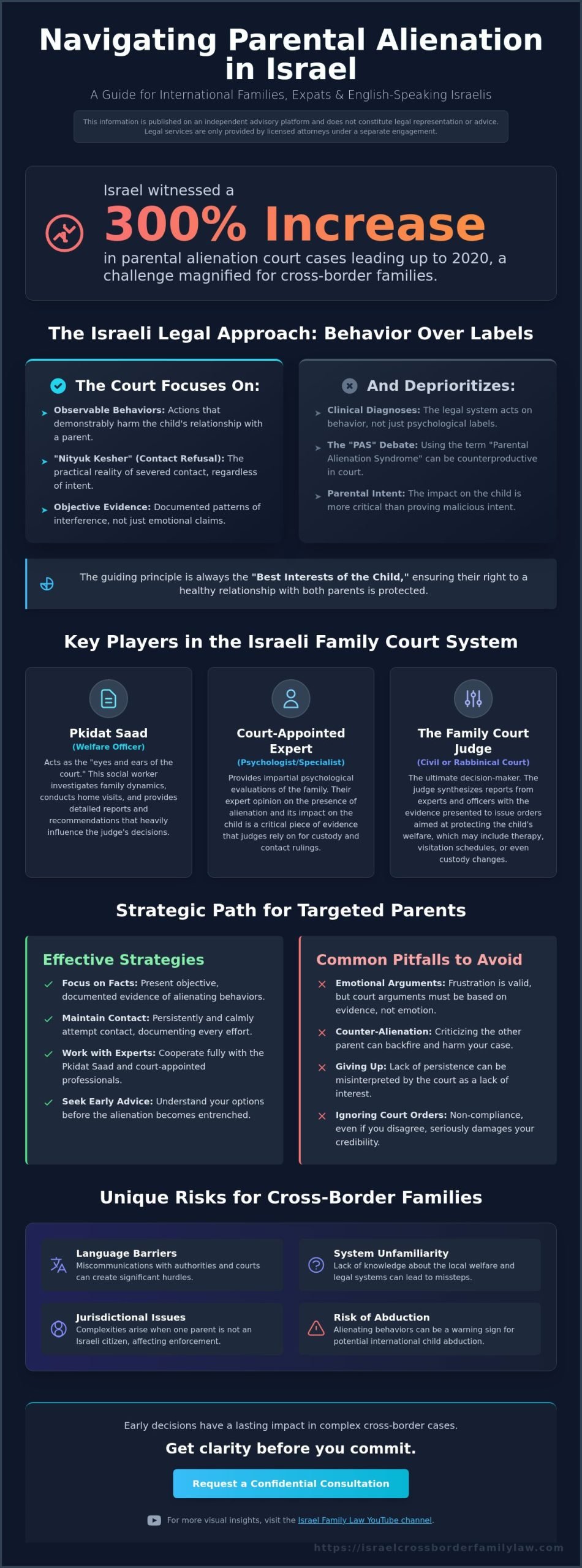
Did you know that Israel saw a 300% increase in court cases involving parental alienation in the years leading up to 2020? For international families and expats, this challenge is often magnified by language barriers and a lack of familiarity with the local welfare system. You likely feel a profound sense of urgency, fearing that every day of silence from your child makes the damage harder to repair. It’s frustrating when the legal process feels slow, but understanding how the system identifies Parental Alienation Israel is the first step toward regaining control.
We’ll help you understand how the Israeli legal system manages these complex situations to protect your relationship with your child. You’ll learn about the critical role of court-appointed experts, the function of social workers known as Pkidat Saad, and how recent 2024 court rulings have established significant financial damages for alienation. This guide previews the strategies needed to work with experts and re-establish contact through the family court. For more visual insights, you can also explore helpful resources on the Israel Family Law YouTube channel. Get clarity before you commit. Request a confidential consultation.
Key Takeaways
- Learn how the Israeli legal system identifies psychological manipulation and why addressing Parental Alienation Israel through objective evidence is more effective than emotional arguments.
- Understand the central role of the Pkidat Saad, or Welfare Officer, and how court-appointed experts provide the evaluations that judges rely on for custody decisions.
- Discover why focusing on specific alienating behaviors is a more successful strategy than using the debated “Parental Alienation Syndrome” label in a courtroom setting.
- Gain practical insights on maintaining consistent contact with your child and avoiding counter-alienation tactics that could complicate your standing.
- Identify the unique jurisdictional risks faced by international families, including how certain behaviors may serve as warning signs of potential international child abduction.
This article is published on an independent advisory platform and does not imply an attorney-client relationship. Legal services are only provided by licensed attorneys under a separate engagement.
Understanding Parental Alienation within the Israeli Legal Context
Parental alienation involves the psychological manipulation of a child by one parent, leading the child to reject the other parent without a legitimate reason. In the context of Parental Alienation Israel, the legal system has moved beyond viewing this strictly as a clinical diagnosis. Instead, judges focus on the observable behaviors that damage the child’s well-being. The guiding principle remains the “best interests of the child,” a standard used to evaluate how conflict impacts the minor’s development and long-term mental health.
While Understanding Parental Alienation as a psychological concept is helpful, Israeli Family Courts prioritize practical legal reality. They look for patterns where one parent undermines the other parent’s authority or restricts access. This transition from theory to legal action allows the court to intervene before the relationship is permanently severed. For international families, these situations are often complicated by different cultural expectations regarding parenting roles and the isolation that comes with living abroad.
To better understand how these cases are viewed by legal professionals, watch this helpful video featuring a retired Israeli judge:
The Legal Concept of “Nityuk Kesher” (Severing of Contact)
Israeli courts frequently use the Hebrew term “Nityuk Kesher,” which translates to a severing of contact. Judges often prefer the term “contact refusal” over “alienation” to focus on the child’s current situation rather than the parent’s intent. It’s vital to identify the early stages of this refusal. If contact refusal becomes entrenched, the legal remedies become more invasive and difficult to implement. The court must distinguish between justified estrangement, which occurs when a child pulls away due to a parent’s own harmful actions, and unjustified alienation fueled by the other parent’s influence.
Parental Responsibility and the Israeli Family Court
The court holds inherent authority to intervene in the parent-child relationship to ensure the child’s welfare. The Israeli court maintains a fundamental obligation to protect a child’s right to maintain a meaningful relationship with both parents. Cases may be heard in either the Civil Family Court or the Rabbinical Court. Each system has its own procedural nuances, but both are bound by the same “best interests” standard. Making early strategic decisions about where to file can significantly impact the outcome of a case involving Parental Alienation Israel. Get clarity before you commit. Request a confidential consultation.
This article is published on an independent advisory platform and does not imply an attorney-client relationship. Legal services are only provided by licensed attorneys under a separate engagement.
The Role of the Welfare Officer and Court-Appointed Experts
The Welfare Officer, known in Israel as the Pkidat Saad, acts as the eyes and ears of the court. In cases involving Parental Alienation Israel, the judge rarely makes a final determination without a detailed report from this professional. These social workers are tasked with investigating the family dynamic, conducting home visits, and making recommendations that carry significant weight in judicial proceedings. According to 2025 data from the Israeli Ministry of Welfare, there was a 14% increase in cases requiring court-ordered psychological intervention to address these behaviors. This rise highlights the system’s reliance on professional oversight to protect children in high-conflict situations. You can read more about the evolving landscape of Parental Alienation in Israeli Family Courts to understand the broader legal context.
The court often appoints independent experts to conduct “parental capability” assessments. These evaluations are rigorous and involve multiple interviews and psychological testing. The expert’s role is to determine if one parent is intentionally undermining the child’s bond with the other. Their findings often form the backbone of the final judicial ruling. To enforce compliance with visitation orders, Israeli courts can impose financial sanctions or fines ranging from ₪500 to ₪1,500 for every missed visit. These measures demonstrate that the court views the maintenance of the parental bond as a high priority.
Navigating the “Pkidat Saad” Investigation
Interacting with a Welfare Officer can feel intimidating, especially for expats unfamiliar with Israeli bureaucracy. It’s vital to maintain a calm and cooperative demeanor. The Pkidat Saad is an officer of the court, not your personal therapist or advocate. When speaking with them, focus on providing objective facts about your relationship with your child. Avoid venting frustrations about your ex-partner’s character. Instead, document specific instances where visitation was blocked or communication was hindered. This evidence-based approach is far more effective than emotional appeals.
The Appointment of Guardians ad Litem
In severe cases of Parental Alienation Israel, the court may appoint a Guardian ad Litem. This is a separate legal representative specifically for the child. This ensures the child’s voice is heard without requiring them to testify in open court. The Guardian ad Litem evaluates the situation from the child’s perspective and makes recommendations independent of either parent’s wishes. Their influence on custody and visitation is substantial. If you are navigating these complexities as an international resident, it’s helpful to understand how these roles differ from those in your home country. You might find it useful to learn more about the unique needs of international families in Israel.
Get clarity before you commit. Request a confidential consultation.
This article is published on an independent advisory platform and does not imply an attorney-client relationship. Legal services are only provided by licensed attorneys under a separate engagement.
Legal Strategies and the “Parental Alienation Syndrome” (PAS) Debate
Israeli family courts have evolved in how they process cases of Parental Alienation Israel. While some advocates still use the term “Parental Alienation Syndrome” (PAS), modern judges are increasingly skeptical of this specific clinical label. This skepticism often stems from the lack of universal recognition of PAS in international medical manuals. However, being wary of the label doesn’t mean the court is blind to the reality of the situation. Judges remain highly sensitive to the harmful behaviors that the label describes. Effective strategy focuses on proving these specific actions rather than arguing over a psychological diagnosis.
Courts may order reunification therapy as a practical step toward restoring the bond. While these programs aim to bridge the gap between parent and child, they have limitations. Therapy often requires the cooperation of both parents to succeed. If one parent remains committed to undermining the process, the court may turn to more assertive measures. This includes financial sanctions or fines for non-compliance with visitation orders. In a landmark October 2024 ruling, a Tel Aviv Family Court awarded a father 250,000 NIS in damages. This decision established that alienation can be treated as a civil wrong, holding the alienating parent financially accountable for the breach of the family bond.
Proving Alienating Behaviors in Court
Success in court depends on the quality of your documentation. You should maintain a detailed log of every missed visitation and instances of blocked communication. Digital evidence, such as WhatsApp messages and emails, can be highly effective when presented correctly. It’s important to respect privacy laws while gathering this data. Evidence must demonstrate a consistent pattern of behavior rather than isolated or infrequent incidents. Showing the court a timeline of events helps experts see the systematic nature of the alienation.
The “Emergency” Response to Contact Refusal
When contact is completely severed, time is of the essence. Israeli courts aim to intervene within 14 days for urgent cases involving a total loss of contact. Filing an urgent motion for the enforcement of visitation is often necessary to prevent a new “status quo” from becoming entrenched. If the child becomes accustomed to the absence of a parent, judges may be more reluctant to disrupt their new routine later. In cases where there’s a risk of the child being taken abroad, understanding the intersection with international custody relocation is critical. Early legal strategy can help you secure stay-of-exit orders to ensure the child remains within the jurisdiction while the case is resolved.
Get clarity before you commit. Request a confidential consultation.
This article is published on an independent advisory platform and does not imply an attorney-client relationship. Legal services are only provided by licensed attorneys under a separate engagement.
Practical Steps for Parents Facing Alienation in Israel
Maintaining consistent contact attempts is essential, even when those efforts are met with rejection or silence. From a legal perspective, these documented attempts serve as critical evidence that you remain committed to the parental bond. If you stop trying, the alienating parent may argue that you’ve abandoned the child or that you’re indifferent to the relationship. You should continue to send messages, emails, and gifts according to the established schedule. This persistence demonstrates to the court that the barrier to contact isn’t coming from your side.
You must avoid the temptation to engage in “counter-alienation.” Speaking negatively about the other parent or pressuring the child for information often backfires. In the context of Parental Alienation Israel, judges and welfare officers look for the parent who can prioritize the child’s stability. Reacting with anger or desperation can inadvertently support the false narrative that you’re a source of stress for the child. Managing the emotional toll is a long-term requirement. Seeking specialized therapeutic support for yourself is a strategic decision. It ensures you remain a “safe harbor” for your child when contact is eventually restored.
The Importance of Strategy Over Emotion
Reacting with visible frustration often plays directly into the alienating parent’s narrative. When you attend expert meetings or court hearings, staying “child-focused” is your most powerful tool. Every legal filing should emphasize the child’s right to both parents rather than your own desire for “victory.” For tactical insights on how to handle these interactions, you can watch the advisory videos on the Israel Family Law YouTube channel. These resources offer a deeper look at the behaviors that Israeli judges value in high-conflict custody cases.
Working with Your Legal Team
It’s vital to ensure your legal counsel has specific experience with “Nityuk Kesher” cases. These matters are distinct from standard custody disputes and require a nuanced understanding of psychological manipulation. Before committing to a specific litigation path, many international families find value in an advisory review to map out potential risks. This helps in identifying whether the civil family court or the rabbinical court is the better venue for your specific situation. You can learn more about our strategic planning process and how it works to support your goals.
Preparing for the financial and emotional investment is also necessary. Court-appointed experts typically cost between ₪5,000 and ₪15,000, and these evaluations are a necessary step in the process. There are rarely quick fixes, but a structured approach can protect your long-term relationship. Speak with an advisor about your specific circumstances to gain clarity on your options.
Get clarity before you commit. Request a confidential consultation.
This article is published on an independent advisory platform and does not imply an attorney-client relationship. Legal services are only provided by licensed attorneys under a separate engagement.
Strategic Advisory for Cross-Border Families
Managing Parental Alienation Israel is uniquely challenging when one parent is an expat and the other is a local Israeli. The local parent often holds a home-field advantage. They have a native support network and full fluency in the Hebrew legal environment. For the international parent, the system can feel opaque. Cultural differences often influence how social workers perceive parenting styles. What an Anglo parent might see as “assertive advocacy” for their child, an Israeli Welfare Officer might interpret as “unnecessary aggression.” These misunderstandings can inadvertently support the alienating parent’s narrative. You need a strategy that translates your actions into the cultural and legal expectations of the Israeli system.
Alienation is frequently a precursor to international child abduction. If a parent is systematically removing you from the child’s life, they may be laying the groundwork to relocate the child permanently. This often involves gathering travel documents or closing local bank accounts in secret. Under the Hague Convention, proving “habitual residence” is key. However, the psychological damage done by alienation can make the legal return of the child much more difficult if they have been taught to fear you. You must act at the first sign of contact refusal to secure stay-of-exit orders. These orders prevent the child from leaving the country while the custody dispute is being resolved.
Jurisdictional Issues and Alienation
Conflict often arise when there are competing custody arrangements between Israel and another country. While Israel generally respects international legal principles, the local court will always prioritize its own “best interests of the child” standard. If an alienating parent attempts to move the child to another jurisdiction, you must act immediately to establish jurisdictional priority in Israel. This is a critical component of divorce for international families who are navigating two different legal systems simultaneously. A failure to secure the Israeli jurisdiction early can lead to years of expensive litigation in multiple countries.
Final Recommendations: Get Clarity Before You Commit
An early strategic assessment is the most effective way to prevent long-term damage to your relationship with your child. Aggressive litigation without a clear plan often fuels the alienating parent’s narrative. It can also frustrate court-appointed experts who are looking for the most stable parent. You must understand the risks of every motion before it’s filed in court. Decisions made in the first few weeks of a contact refusal case often dictate the trajectory of the relationship for years. Strategy must always come before emotion in high-conflict cases involving Parental Alienation Israel.
Get clarity before you commit. Request a confidential consultation.
This article is published on an independent advisory platform and does not imply an attorney-client relationship. Legal services are only provided by licensed attorneys under a separate engagement.
Protecting the Parental Bond Through Strategic Action
Successfully addressing Parental Alienation Israel requires a transition from emotional distress to a disciplined, evidence-based strategy. You’ve seen that the Israeli legal system increasingly relies on expert evaluations and financial sanctions to enforce visitation and protect the child’s well-being. For international families, these cases involve added layers of complexity; including jurisdictional disputes and the risk of international child abduction. Early intervention and a clear understanding of the welfare system are your most effective tools for restoring your relationship with your child.
Managing these challenges requires a partner who understands both the Israeli and international legal landscapes. With decades of experience in cross-border family law and a physical presence in both Tel Aviv and New York, our advisory offers specialized expertise in international custody and the Hague Convention. It’s possible to secure your future and maintain a meaningful bond with your child through a structured, risk-based approach. Get clarity before you commit. Request a confidential consultation.
This article is published on an independent advisory platform and does not imply an attorney-client relationship. Legal services are only provided by licensed attorneys under a separate engagement.
Frequently Asked Questions
How does Israel handle parental alienation in the Family Court system?
Israeli courts treat alienation as a serious civil wrong rather than a criminal offense. The system utilizes a dual-court structure where both the Civil Family Court and the Rabbinical Court hold jurisdiction. Judges prioritize rapid intervention through the 2019 Parental Alienation Procedure to prevent long-term damage. Recent 2024 rulings have even utilized tort law to award significant financial damages to parents who have been systematically removed from their children’s lives.
Can a parent lose custody in Israel due to parental alienation?
Yes, the court has the authority to alter custody arrangements if it’s determined to be in the child’s best interest. If alienating behaviors are proven to be severe and harmful, a judge may transfer custody to the alienated parent or a neutral third party. This is viewed as a protective measure to ensure the child maintains a healthy relationship with both parents, rather than a punishment for the custodial parent.
What is the role of the Welfare Officer (Pkidat Saad) in alienation cases?
The Welfare Officer acts as an objective investigator and an officer of the court. They conduct home visits and interviews to identify the root cause of contact refusal. Their recommendations carry significant weight; in 2025, the Ministry of Welfare reported a 14% increase in cases requiring court-ordered psychological intervention. They help the judge determine if the child’s refusal is based on justified estrangement or unjustified manipulation.
How long does it take for Israeli courts to intervene in contact refusal?
Israeli courts aim to intervene within 14 days for urgent cases involving a complete severance of contact. If a child’s safety or mental health is at immediate risk, emergency hearings can be scheduled within 24 hours. This sense of urgency is a core component of the legal system’s approach to Parental Alienation Israel, ensuring that the bond between parent and child isn’t permanently severed by a slow legal process.
What happens if a child refuses to go to visitation in Israel?
The court typically investigates whether the refusal is a result of parental influence or the child’s independent will. Judges can impose financial sanctions on the parent who is failing to facilitate visitation. These fines generally range from ₪500 to ₪1,500 for every missed visit. The court may also appoint a Guardian ad Litem to represent the child’s interests and provide an independent perspective on the family dynamic.
Is Parental Alienation Syndrome (PAS) recognized by Israeli judges?
While the specific clinical label of “PAS” is often met with skepticism, judges are highly sensitive to the behaviors it describes. The Israeli legal system focuses on observable “alienating behaviors” and “contact refusal” rather than psychological diagnoses. This approach allows the court to intervene based on factual evidence of manipulation, even if the specific syndrome isn’t formally cited in the final judicial ruling.
Can I stop paying child support if my child is being alienated from me in Israel?
You shouldn’t stop payments unilaterally, as this can damage your legal standing in court. However, there are precedents for reducing support in extreme cases. In a May 2025 ruling, an Israeli Family Court reduced child support to 1,000 NIS per month when the parent was alienated. It’s essential to seek a court order for any adjustment to your financial obligations rather than taking independent action.
What are the first steps to take if I suspect parental alienation is occurring?
Begin by documenting every instance of missed contact and any communication that appears manipulated by the other parent. You should seek a strategic assessment to determine whether the Civil or Rabbinical court is the best venue for your case. Early action is critical to prevent a “status quo” of no contact from becoming permanent. Get clarity before you commit. Request a confidential consultation.

Article by
Gabriel Lior
A Personal Journey That Became a Mission
The advisory was founded by an American father Gabriel Lior, LLB, MBA , global entrepreneur, and cross-border advisor who spent more than a decade navigating the Israeli family court system firsthand and now lives in Singapore with his son.
As a divorced parent in a cross-border family, Gabriel faced nearly every legal challenge a foreign parent can encounter in Israel — including child custody disputes, child support proceedings, property matters in Israel and abroad, false accusations, and complex immigration and relocation proceedings.
Over the years, he learned the hard way how difficult it is for non-Israeli parents to understand the system, identify the right legal strategy, and choose the right legal representation — especially when language, culture, and jurisdictional differences are involved. He also witnessed how foreign parents and new immigrants are often disadvantaged or taken advantage of by service providers and institutions simply because they lack local knowledge or fluency.
From Client to Advisor
To truly understand — and survive — the system, Gabriel pursued formal legal education in Israel, completing two Israeli law degrees, alongside a BA and MBA earned in the United States. This was never about becoming a practicing attorney, but about gaining a deep, structural understanding of how the system works — and where it breaks down for foreign parents.
This rare combination of:
Firsthand client experience
Israeli legal and US business education
International business and negotiation training
Decades of commercial execution
created a unique perspective – one that understands both sides of the table.
After years of litigation, persistence, and at times self-representation, he ultimately succeeded in securing custody of his son and relocating abroad through a rare legal victory in the Israeli Supreme Court — becoming one of the first fathers in Israel to do so under these circumstances.
Disclaimer
Important Disclaimer:
The information provided on this website and in its content is for general informational and educational purposes only and does not constitute legal advice, legal opinion, or legal representation.
Gabriel Lior is not licensed to practice law in Israel (nor is he interested in doing so) and does not provide legal services, despite having completed 2 Law Degrees. The services offered are advisory in nature and are intended to provide general guidance, strategic insight, and information regarding cross-border family law considerations.
No attorney-client relationship is formed by accessing this website, reading its content, or communicating with us.
Any decisions made based on this information are at your own discretion and risk. For legal advice specific to your situation, you should consult a licensed attorney in the relevant jurisdiction.
Where appropriate, we may refer clients to independent, licensed attorneys or professionals. Such referrals do not constitute legal representation and no liability is assumed for services provided by third parties.